Vibration measurement for damage detection of truss bridges

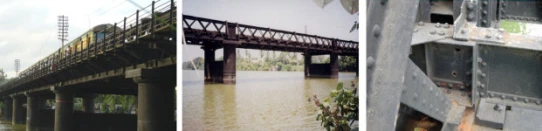
Microsoft Word - Figure_1.docxA new case study published in « Case Studies in Engineering Failure Analysis » of ooctober 2015
This paper proposes a simple technique to locate the damage region of railway truss bridges based on measured modal parameters. The technique is discussed with a case study of a railway bridge.

Source : Vibration measurement-based simple technique for damage detection of truss bridges: A case study

The Failure Analysis and Simulation of an ABS Extrusion Die

2016-04-18_23h25_24A paper published in « Procedia Engineering » and available on ScienceDirect.

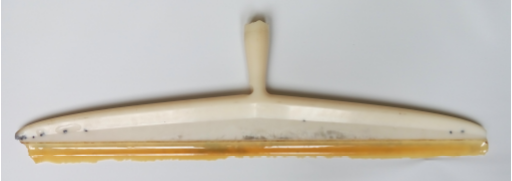
Coat-hanger dies are widely used in the extrusion of plate and sheet, since it can achieve uniform velocity attribution on the outlet according to balancing the distribution of flow through the die. A failure ABS extrusion die of a petrochemical company is studied in this paper. The results show that the pressure drop in the die exceed the maximum allowable value, which is the main cause of die failure, in addition to the exceeded pressure drop the fluctuation of the velocity on the outlet is too large, which would lead to poor quality of product. The work in the paper provides guidance for the future die design and optimization.

Read the paper

Fracture analysis of U71Mn rail flash-butt welding joint

An other case study published in « Case Studies in Engineering Failure Analysis« , october 2015.

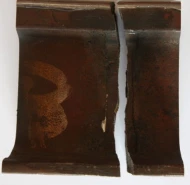
This paper mainly investigates the fracture problem of U71Mn rail flash-butt welding joint. The analysis results show that the welding joint is fatigue fracture, and the fracture surface morphology is the cleavage fracture characteristics.

Source : Fracture analysis of U71Mn rail flash-butt welding joint

Cas Concrets – Des pales et hélices défaillantes

Avatar Cas ConcretsTrois cas d’analyses de défaillances survenues en service : hélices de navires et pale de ventilateur. Ces trois fiches d’analyse de défaillance avaient été publiées en 1984 dans la revue Cetim-information. Des dizaines de milliers de cas ont été traités ces quarante dernières années par le Cetim. Cette expérience fait du Centre une référence dans le domaine à même d’intervenir dans tous les secteurs d’activités. Avec aujourd’hui ses centres associés et partenaires, l’Institut technologique Cetim met un ensemble de compétences et de moyens au service des industriels et experts pour analyser, comprendre et proposer des solutions permettant d’éviter la reproduction de ces défaillances. Les différentes expertises de cette série « Cas concrets » sont issues d’articles publiés dans la revue Cetim Informations dans les années 74 à 90. Bien que ces fiches traitant de cas concrets soient anciennes, leur contenu est toujours d’actualité…

Source : Cas Concrets – Des pales et hélices défaillantes – Cetim – Centre technique des industries mécaniques

Cas Concrets – Quatre défaillances par fissuration progressive

Avatar Cas ConcretsQuatre cas d’analyses de défaillances survenues en service : un vilebrequin de moteur marin, un arbre épaulé, un maillon de chaine d’élévateur et un taillant de forage. Ces quatre fiches d’analyse de défaillance avaient été publiées entre 1984 et 1985 dans la revue Cetim-information. Des dizaines de milliers de cas ont été traités ces quarante dernières années par le Cetim. Cette expérience fait du Centre une référence dans le domaine à même d’intervenir dans tous les secteurs d’activités. Avec aujourd’hui ses centres associés et partenaires, l’Institut technologique Cetim met un ensemble de compétences et de moyens au service des industriels et experts pour analyser, comprendre et proposer des solutions permettant d’éviter la reproduction de ces défaillances. Les différentes expertises de cette série « Cas concrets » sont issues d’articles publiés dans la revue Cetim Informations dans les années 74 à 90. Bien que ces fiches traitant de cas concrets soient anciennes, leur contenu est toujours d’actualité…

Source : Cas Concrets – Quatre défaillances par fissuration progressive – Cetim – Centre technique des industries mécaniques

EXPERIMENTAL AND NUMERICAL STUDY OF OBLIQUE IMPACT ON HELICOPTER BLADES

thA work presented on ECCM16 – 16TH EUROPEAN CONFERENCE ON COMPOSITE MATERIALS, Seville, Spain, 22-26 June 2014

This work focuses on the study of medium velocity (~70 m/s) oblique impacts on the lower surface of helicopter blades. In this study, the influence of the local curvature of the blade on the response to an oblique impact is investigated.  A numerical study is also performed. It is shown that for the geometries involved in the design of helicopter blades, the curvature does not have any influence on the structural response to an impact. However, in the case of oblique impacts, the curvature can change locally the impact angle so that the damage is different than for impacts on a planar sample.

Read more at : http://www.escm.eu.org/eccm16/assets/0339.pdf

Rupture d’une pièce de train d’atterrissage

capture 2015-01-13_09h40_21

Une fiche d’analyse de défaillance publié au Etats-Unis dans www.dtbtest.com traite d’un cas de rupture de fatique d’une pièce de train d’atterrissage en alliage d’aluminium A356-T6 moulé.

N’hésitez pas à solliciter les experts du Cetim si vous rencontrez un cas similaire. Forts de près de 50 ans d’expérience dans l’analyse des défaillances ils mettent leur savoir-faire à votre disposition. Pour les contacter suivez le lien : Service Question-Réponse

Failure analysis of axle shaft of a fork lift

Un nouveau cas concret d’analyse de défaillance publié dans « Case studies in Engineering Failure Analysis » sur Science Direct.com.

An axle shaft of fork lift failed at operation within 296 hours of service. The shaft transmits torque from discrepancy to wheel through planetary gear arrangement. A section of fractured axle shaft made of induction-hardened steel was analyzed to determine the root cause of the failure.  The analysis suggests that the fracture initiated from the martensitic case as brittle mode due to improper heat treatment process (high hardness). Moreover the inclusions along the hot working direction i.e. in the longitudinal axis made the component more susceptible to failure.

Lire l’article

Vous rencontrez un problème similaire ? Prenez contact avec les experts du Cetim et profitez de leur savoir-faire et de leur expérience de près de 40 ans dans le domaine de l’analyse des défaillances.

Contact

Needle Roller Bearing at Gudgeon Pin of Ginning Machine

A2016-01-14_09h23_47 paper published by IJRET (International Journal of Research in Engineering and Technology).

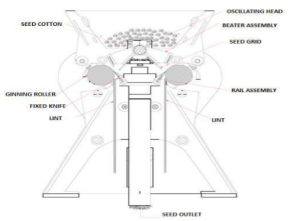
In ginning machine where space is limited for driving the mechanism a Needle roller bearing having diameter of 20 mm is used in between connecting rod and head pin to give the relative motion between parts. As the continuous impacting of repetitive load on bearing, it fails with in shorter period of time if proper lubricant is not supplied by grease gun after 2 to 3 hours. While bearing are considered under observation it is found that bearing are fail due to brinnelling. So design and analysis of needle roller bearing is vital to calculate the life of bearing and to make sure whether this bearing is suitable or not. So it becomes mandatory in designing to calculate radial load applied on bearing as the bearing is rolling contact bearing, from this life of the bearing can be calculated and finally analysis by ANSYS software is done to find the result so that we can conclude for bearing.

Read more at : IJRET20150411007.pdf

Effect of Water Hammer on Bent Pipes in the Presence of a Pre-crack

978-3-319-17527-0Un autre article paru dans la revue « Design and Modeling of Mechanical Systems de mars 2015.

In this study, transient pressure in piped liquid due to waterhammer is a function of structural restraint at elbows. To study the effect of this phenomenon on polyethylene elbowed pipe networks, experimental tests were performed on polyethylene bent pipes, either in the absence or presence of a pre-crack by measuring the toughness and determining the mechanical behavior of HDPE. These characteristics were been used to perform simulations using ABAQUS software, the internal pressure increase, to investigate the safety of bent pipes using an angle of 90 ° bend with 11.4 mm thickness and a right portion of 150 mm as length

Voir l’article