Failure Analysis of a Reactor after Explosion Accident

2016-04-18_23h00_19A paper published in « Procedia Engineering« , Volume 130, 2015.
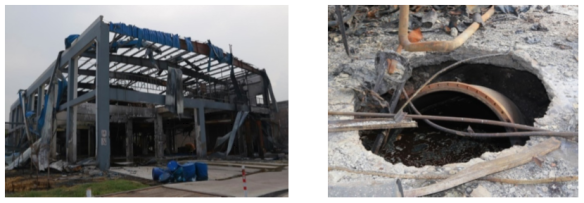
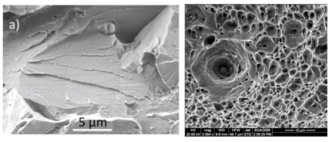
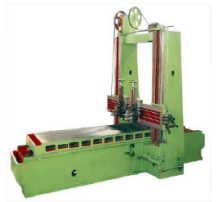
Burst of a reactor occurred in an explosion accident during the production of antistatic agent process. According to the results of site survey, the current regulations and standards as well as the requirements of the accident investigation group, the reason of burst was discussed by failure analysis of the shell and bolts.

Read the paper

Development of banded microstructure in 34CrNiMo6 steel

2016-04-18_22h49_18

A paper published in « METALURGIJA 55″ (2016) 3, 329-332

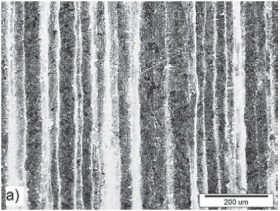
In this paper the development of a banded microstructure in hot-rolled 34CrNiMo6 steel which consisted of bainitic  and martensitic bands is explained. The continuous
cooling transformation (CCT) diagrams of steel were calculated. They confirmed the formation of martensite in  positive segregations and the formation of bainite in negative ségrégations.

Read the paper

Modes of failure of cemented tungsten carbide tool bits : A study of wear parts

2016-04-18_22h29_00An article published in « International Journal of Refractory Metals and Hard Materials », july 2015.

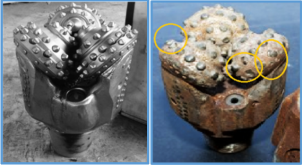
Tungsten carbide alloyed with cobalt (WC/Co) shows unique characteristics like high strength at elevated temperature and high mechanical and chemical resistance that makes carbide tools appropriate for cutting, drilling, mining and machining operation. A whole failure study is revealed within the paper. This study also discusses the failure mode of a tungsten carbide tools, its prediction and remedies.

Read the paper


PVD CrN-coated die for aluminy hot extrusion

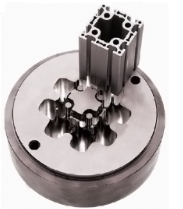
2016-04-18_22h16_19The study shows that considerable reserves still exist for increasing the service times of CrN-coated  dies for Al hot extrusion. The main reasons for the decreased service times are revealed and explained regarding  the selected CrN-coated die for hot extrusion, i.e. why the service time of the coated-die is not in accordance with  the wear resistance of the CrN-coating. The shaping of the bearing surface and presence of the scratches, size and  amount of nonmetalic inclusions in the die steel, nodular defects in the CrN-coating, as well as thicknesses uniformity  of CrN-coatings along the bearing surface, are relevant influential parameters.

Read the paper.

EXPERIMENTAL AND NUMERICAL STUDY OF OBLIQUE IMPACT ON HELICOPTER BLADES

thA work presented on ECCM16 – 16TH EUROPEAN CONFERENCE ON COMPOSITE MATERIALS, Seville, Spain, 22-26 June 2014

This work focuses on the study of medium velocity (~70 m/s) oblique impacts on the lower surface of helicopter blades. In this study, the influence of the local curvature of the blade on the response to an oblique impact is investigated.  A numerical study is also performed. It is shown that for the geometries involved in the design of helicopter blades, the curvature does not have any influence on the structural response to an impact. However, in the case of oblique impacts, the curvature can change locally the impact angle so that the damage is different than for impacts on a planar sample.

Read more at : http://www.escm.eu.org/eccm16/assets/0339.pdf

Failure analysis of axle shaft of a fork lift

Un nouveau cas concret d’analyse de défaillance publié dans « Case studies in Engineering Failure Analysis » sur Science Direct.com.

An axle shaft of fork lift failed at operation within 296 hours of service. The shaft transmits torque from discrepancy to wheel through planetary gear arrangement. A section of fractured axle shaft made of induction-hardened steel was analyzed to determine the root cause of the failure.  The analysis suggests that the fracture initiated from the martensitic case as brittle mode due to improper heat treatment process (high hardness). Moreover the inclusions along the hot working direction i.e. in the longitudinal axis made the component more susceptible to failure.

Lire l’article

Vous rencontrez un problème similaire ? Prenez contact avec les experts du Cetim et profitez de leur savoir-faire et de leur expérience de près de 40 ans dans le domaine de l’analyse des défaillances.

Contact

Fragilisation par hydrogène d’un cupro-béryllium

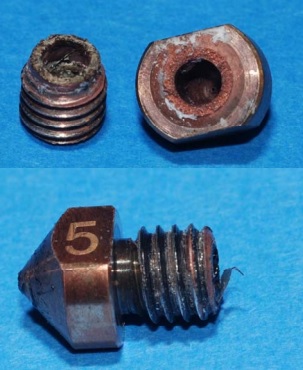
nuzzle 3D printerNous rapportons ici un article de Engineering Systems, Inc., (ESI) au USA,  publié sur www.esi-website.com. L’article concerne l’analyse des causes de rupture intergranulaire de buses en cupro-béryllium C17200 équipant une imprimante 3D. Les buses se sont rompues en service à haute température (210-300°C).

Les résultats des analyses réalisées amènent à la conclusion qu’il s’agit d’un phénomène de rupture intergranulaire due à une fragilisation par hydrogène sur un alliage de cuivre riche en oxygène.

Ce type de fragilisation n’est pas courant, n’hésitez pas à contacter les experts défaillances du Cetim et ses partenaires.

Lire l’article dans son intégralité

Résistance à l’arrachement des vis de fixation de la colonne vertébrale humaine

Un article publié dans « Journal of Biomechanics » traite d’une enquête sur la résistance à l’arrachement des vis de fixation de la colonne vertébrale humaine. Cet article vient en complément d’un article traitant de ruptures de vis pédiculaires que nous avons posté en mai dernier.

Le labo de biomécanique du Cetim peut lui aussi vous apporter son expertise dans le domaine.

Voir aussi sur le sujet un article paru dans « Journal of Orthopaedic Research« , 2005.

Failure of Metals I – Brittle and Ductile Fracture

mixteA ne pas manquer de lire sur researchgate.net, trois publications intégrales et récentes sur « La ruptures des métaux » rédigées par André Pineau, A.A. Benzerga et Thomas Pardoen.

La première concerne la rupture ductile et fragile. Il s’agit d’une vue d’ensemble des phénomènes de ruptures sous chargement monotone dans un contexte d’approche globale.

« This is the first of three overviews on failure of metalsHere, brittle and ductile failure under monotonic loadings are addressed  within the context of the local approach to fracture.In this approach, focus is on linking microstructure, physical mechanisms and overall fracture properties….. »

Accéder au texte intégral

FAILURE ANALYSIS OF DRIVING MECHANISM IN HORIZONTAL PLANNING MACHINE

planing machineAn article published in « International Journal of Research and Innovation in Engineering Technology » (IJRIET), available online 26 February 2016.

In this paper the failure analysis and optimization of horizontal mechanism in a horizontal planning machine rack and pinion arrangement is needed for the translation movement. In general, wear occurring in V-Guides ways and drive mechanism are not equal. So that, the variation of the wear amount should affect the surface level of to be machined component. The failure is rectified to implement the new mechanism (arrangement) in driven portion of the horizontal mechanism.

Read more