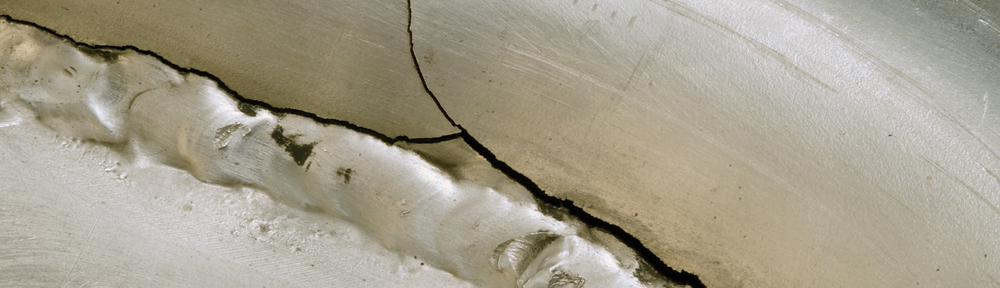
Rupture d’une roue conique d’un moteur d’hélicoptère

The Transportation Safety Board of Canada a publié sur son site les résultats de l’enquête menée à la suite de l’accident d’un hélicoptère Aerospatiale AS 350 B3.

L’examen du moteur a permis de déterminer que la roue conique à 41 dents (référence 0292127330) s’était brisée à cause d’une fissuration de fatigue polycyclique. La roue avait été posée au moment de la fabrication du moteur, et elle totalisait 1644 heures de vol depuis sa mise en service initiale. L’examen métallurgique de la roue a révélé nombre de criques de fatigue prenant naissance à la base de nombreuses dents. Des criques de fatigue circulaires ont également été découvertes en bordure de la roue. Celle-ci ne présentait aucun défaut de fabrication qui aurait pu véritablement contribuer à sa défaillance.

Lien vers le rapport d’expertise :Transportation Safety Board of Canada – Aviation Investigation Report A07O0314.

Rupture d’un ressort de suspension de voiture

Un cas concret d’analyse de défaillance rapporté par ScienceDirect.com et publié dans « Case study in Engineering Failure Analysis ».

Un dommage du revêtement anti-corrosion associé à un processus de fatigue est responsable de cette défaillance.

Pour lire l’article cliquez ici

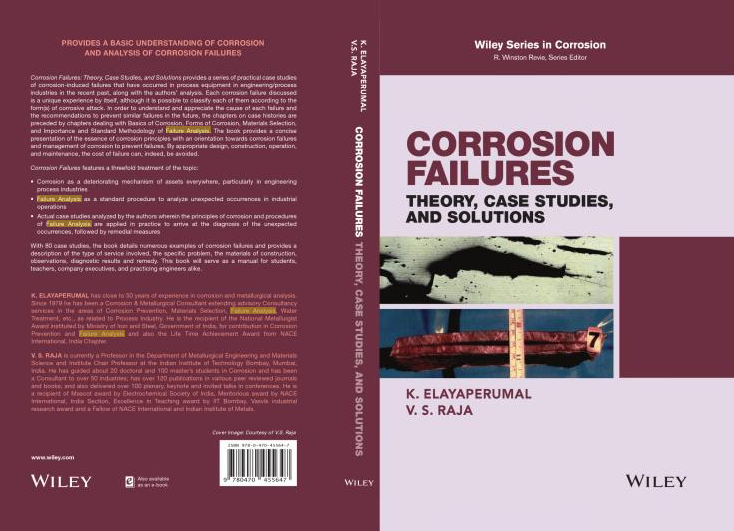
Corrosion Failures: Theory, Case Studies, and Solutions

Corrosion FailuresUn ouvrage sur la corrosion, illustré de 80 cas d’analyses de défaillance va paraître le 8 mai 2015 chez l’éditeur John WILEY & Sons.

Pour en savoir plus : Corrosion Failures: Theory, Case Studies, and Solutions.

Premature Failure of Dissimilar Metal Weld Joint at Intermediate Temperature Superheater Tube

A new case study on Sciencdirect.com. This article was published in « Case Studies in Engineering Failure Analysis » of april 2015.

Premature Failure of EPRI recommended nickel based filler for Dissimilar Metal welds (DMW) such as in the present study has been investigated to determine the root causes. The mechanism involved a creep stage I process on the alloy steel side due to improper PWHT leading to undesirable carbides precipitation increasing the hardness. Therefore, the sensitivity of the welding to micro-cracking combined to bending stresses involvement induced a premature failure within short time of operation.

Read more at : Premature Failure of Dissimilar Metal Weld Joint 

Failure Analysis of Work Rolls of a Thin Hot Strip Mill

A new interesting article published in « Case Studies in Engineering Failure Analysis »

In hot rolling mills, premature failure of rolls is a major concern as it adversely affects the mill operation and as well as production. Analysis of failed roll materials and actual rolling conditions in service are therefore necessary to understand the roll failure mechanism and thereby improve the wear resistance and extend the service life of rolls.

This work describes two different types of roll failure cases and their analysis which was carried out using destructive as well as non-destructive testing techniques (NDT). The cases are as follows:

(a)

Case I: Enhanced ICDP Bottom roll of fifth stand (F#5) which failed from the neck portion.

(b)

Case II: Analysis of sub-surface defect of ICDP rolls of the last stand (F#6

Lire la suite


Failure analysis of the pulleys during the press-fit assembling process

A case study published in « Case Studies in Engineering Failure Analysis« .

This article highlights failure investigation of the pulleys during a press-fit assembling process. Pulleys are used to transmit power between rotational mechanical elements. Failure analysis was found that cooperative influence of higher carbon content with combination of elongated sulphides is reason for pulleys cracking. Steel cleanliness and homogeneous structure is an important factor for users of steel. The success of production process is connected with the optimal quality of steel.

Click here to read more


Failure analysis of Co–Cr hip resurfacing prosthesis during solidification

A paper published on january 2013 in « Case Studies in Engineering Failure Analysis« .

In this study a failure originated during solidification process into the femoral stem component of Hip Resurfacing prosthesis was investigated.  The results exhibited hot tearing, shrinkage porosity and metal oxide films due to inadequate heat dissipation during solidification process, as a consequence of poor investment casting ceramic mold configuration. Also in this paper was improved the casting design solving this kind of defects.

Read more

Failure analysis on unexpected wall thinning of heat-exchange tubes in ammonia evaporators

ScienceDirect.com publishes a new « Case Studies in Engineering Failure Analysis« .

A failure incident of heat-exchange tubes in ammonia evaporators, which suffered from unexpected wall thinning after only one-year service with respect to their original design lifetime of fifteen years, was reported and carefully analyzed. The analysis results demonstrated that the unexpected wall thinning of tubes was primarily ascribed to multiple corrosion factors including uniform corrosion, pitting and interaction behavior between them. Relative failure mechanisms were discussed in detail and prevention measures were also proposed for ammonia evaporators under similar operating condition.

touche Read more

Failure analysis of the pulleys during the press-fit assembling process

A new case studie in engineering  failure analysis published on SienceDirect.com. The present article highlights failure investigation of the pulleys during a press-fit assembling process. Pulleys are used to transmit power between rotational mechanical elements.  It was found that cooperative influence of higher carbon content with combination of elongated sulphides is reason for pulleys cracking. Steel cleanliness and homogeneous structure is an important factor for users of steel. The success of production process is connected with the optimal quality of steel.

 Read more

Failure Analysis of a Helical Compression Spring for a Heavy Vehicle’s Suspension System

An interesting  paper in « Case study in Engineering Failure Analysis » published on ScienceDirect.com. This paper analyzed why a compression coil spring fractured at the transition position from the bearing coil to the first active coil in service, while the nominal stress here should always be much less than that at the inside coil position of a fully active coil. Visual observations indicated that a wear scar was formed on the first active coil and the fracture surface showed radiating ridges emanating from the wear scar. Scanning electron microscopy examination showed crescent shaped region and beach marks, typical of fatigue failure. ZnCaph phosphate layer and painting around the contact zone were worn out due to contact and friction and resulted in corrosion and corrosion pits induced local stress concentration. Stress analysis indicated severe stress singularities at the edges of the contact zone, which facilitated cycle slip and fatigue crack nucleation. Recommendations were also made for improving the fatigue performance of the suspension springs.

Acceder article