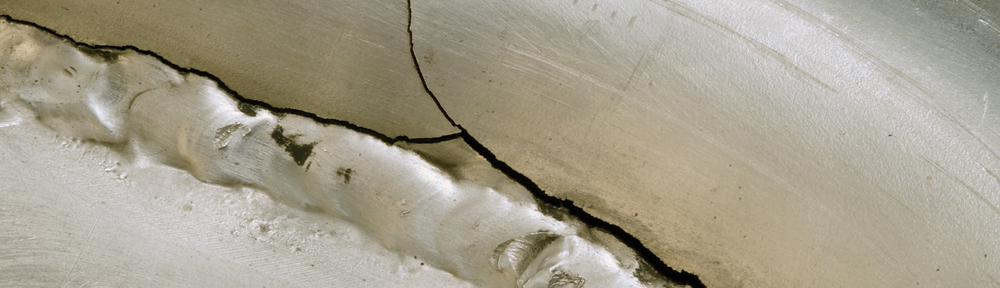
 A new « Case study in Engineering Failure Analysis » published on ScienceDirect.com.
This paper reports investigations after diversion due to coil break in cold rolled non oriented (CRNO) grades of coils showed an increasing trend during Jan–May’12 at Silicon Steel Mill (SSM), Rourkela Steel Plant (RSP). Coil break increased from a level of less than 1% during to a level of 30% in May’12. Samples from hot rolled coils and finished coils were taken and detailed metallurgical investigation was carried out to ascertain the genesis of such defects. Further studies were carried out in the processing lines and material flow was tracked from steel making to final product. The probable reasons were identified and corrective measures were taken leading to reduction in diversion due to coil break less than 2%.

 A new paper in


 A new topic on
 A new paper in
  A new paper in
  This article, published in » Engeeniring Failure Analysis » of september 2010, describes the root cause failure analysis of a mechanical vapor recompressor (MVR) impeller used in a dairy processing plant. A detailed investigation was commissioned to determine the source of the oscillatory stresses that must have been present to cause fatigue. A vibration analysis indicated large torsional oscillatory stresses, leading to fatigue, were induced by excitation of the 1st and 2nd torsional vibration modes of the MVR impeller and motor system. The excitation was induced by the control system for the motor variable speed drive (VSD).
 This article documents the metallurgical evaluation of a rolling element bearing that failed due to electrical discharge damage. This rolling element bearing was used in a helicopter turbine engine that failed in-flight, resulting in a hard landing of the helicopter. Optical and electron microscopy as well as energy dispersive spectroscopy were used to evaluate the bearing. Pitting and material transfer on the external bearing races bearing and mating surfaces revealed that the electrical discharge damage occurred while the engine’s components were not rotating.