

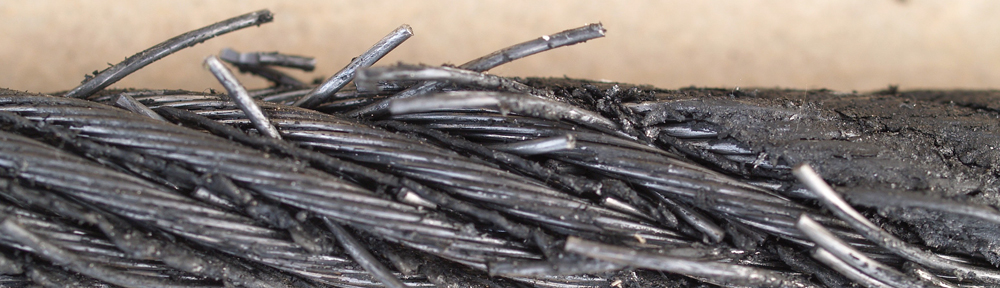

 A new paper about « Case study in Engineering Failure Analysis » published on ScienceDirect.com.
This paper describes the fractographic analysis of a veneer-ZrO2 single-unit dental prosthesis that fractured in a shell-like manner. Analysis of the retrieved fragment revealed that the crack originated in the bulk of the veneer from a thermal flaw located between two layers of the veneering material. Using the measured flaw plane it showed that the conditions of loading at fracture were complex and probably involved important tangential components.

 A new paper in « Case study in Engineering Failure Analysis » published on ScienceDirect.com.
The failure analysis of an insert ring of a burner in a 156 MW gas turbine, made of 20Cr32Ni1Nb alloy is presented. Normally, the useful service life of these parts under ideal conditions is about 30000 hours. However, more likely fracture and failure could be observed in5000-hour inspections, which resulted in the early and premature replacement of these parts. This paper brings out the detail of investigation carried out.

 A new paper in « Case study in Engineering Failure Analysis » published on ScienceDirect.com.
This paper describes cracking of turret terminals made of free cutting brass during swaging operation. The crack propagation tendency during cold working of brass turret terminals made from different compositions is studied through optical and scanning electron microscopy. Finally, composition for obtaining crack free terminals during swaging is suggested for applications involving cold swaging.


A interesting paper in « Case study in Engineering Failure Analysis » published on ScienceDirect.com.
Circular penetrable cracks occurred at the converge region of upward acid media (H2S and HCOOH) in the opposite position of traverse vapor ingress pipe of the lower part of the upper sealing head of the deaerator/sourgas stripper during the operation of the deaerator/sourgas stripper of the ammonia unit in a chemical fertilizer plant.

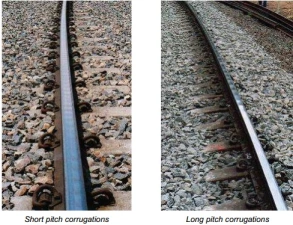 An other publication of the Asset Standards Authority (ASA), an independent unit established within Transport for NSW of Australia.
This manual provides guidelines for the identification of rail surface defects during track inspections. The manual is part of RailCorp’s engineering standards and procedures publications. More specifically, it is part of the Civil Engineering suite that comprises standards, installation and maintenance manuals and specifications. Manuals contain requirements, process and guidelines for the management of civil assets and for carrying out examination, construction, installation and maintenance activities.
 An other interesting publication of the Asset Standards Authority (ASA), an independent unit established within Transport for NSW of Australia.
This manual provides requirements, processes and guidelines for the testing of rail for internal defects and for the acceptance testing of rail welds and weld repairs. The manual is part of RailCorp’s engineering standards and procedures publications. More specifically, it is part of the Civil Engineering suite that comprises standards, installation and maintenance manuals and specifications. Manuals contain requirements, process and guidelines for the management of track assets and for carrying out examination, construction, installation and maintenance activities.
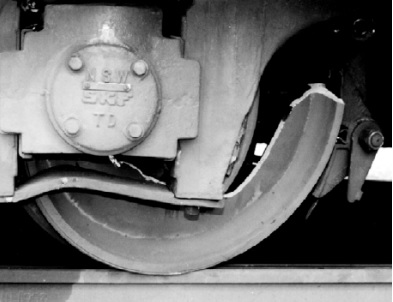 An interesting publication of the Asset Standards Authority (ASA), an independent unit established within Transport for NSW of Australia.
Wheels with defective wheels may cause damage to both the track and the vehicle or lead to derailment. This Wheel Defect Manual provides staff with a summary of wheel conditions under which wheels may continue in service and operating restrictions imposed for defective wheels found on vehicles operating on the RailCorp network.
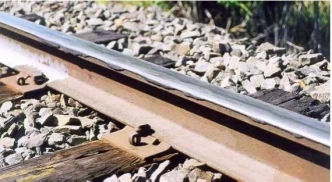
An interesting publication of the Asset Standards Authority (ASA), an independent unit established within Transport for NSW of Australia.
The occurrence of rail defects has generally increased because of the much longer rail lives obtained through various improvements, which have reduced the rail wear and hence have allowed the defects to develop. The main purpose of this Handbook is to describe some of the more common rail defects, their causes, and the possible ways of controlling their development.
