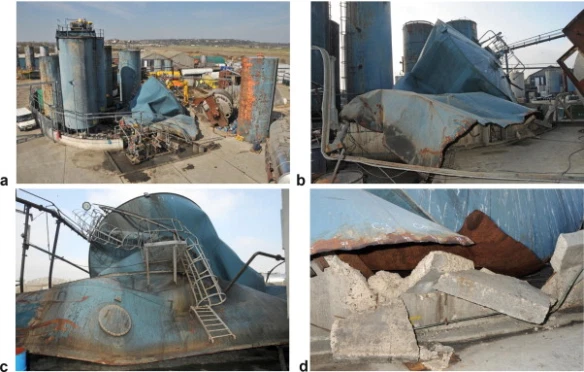
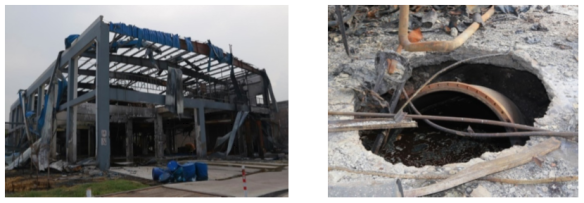
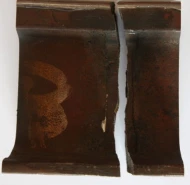
Catastrophic failure of a carbon steel storage tank due to internal corrosion

A case study of failure analysis published in « Case Studies in Engineering Failure Analysis« , october 2013.

Catastrophic failure of a 10 m high, 8 m diameter steel storage tank containing approximately 350 m3 of waste solvent led to a significant environmental incident in 2009. An investigation was carried out to establish the root cause and to learn lessons that might prevent a reoccurrence.

Read more

Failure analysis of a high strength low alloy steel pressure vessel


A Failure Analysis published in « Case Studies in Engineering Failure Analysis » october 2013.

High strength low alloy (HSLA) steel with a nominal composition of 0.15C–1.25Cr–1Mo–0.25V is being extensively used in space programme. Owing to its ease of fabrication and welding, a tank was fabricated out of this alloy. The tank is used to contain strontium per chlorate which on combustion develop secondary thrust, effectively used during attitude control of satellite launch vehicle. During one of the routine qualification tests, a tank had failed at an internal pressure of 109 bar, against a designed proof pressure of 120 bar.
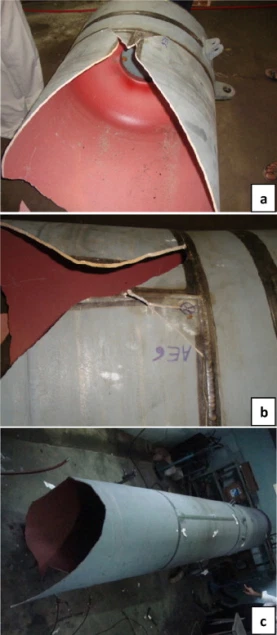
Failure was initiated from long seam weld of a cylindrical shell and propagated into the parent material thereafter. Detailed metallurgical investigation has been carried out to understand the cause of failure. This paper brings out the detail of investigation carried out.

Read more

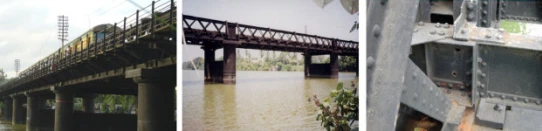
Vibration measurement for damage detection of truss bridges

Microsoft Word - Figure_1.docxA new case study published in « Case Studies in Engineering Failure Analysis » of ooctober 2015

This paper proposes a simple technique to locate the damage region of railway truss bridges based on measured modal parameters. The technique is discussed with a case study of a railway bridge.

Source : Vibration measurement-based simple technique for damage detection of truss bridges: A case study

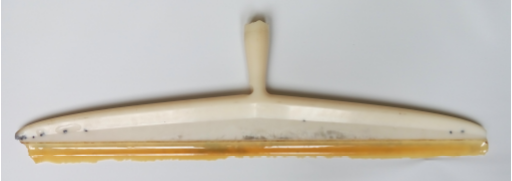
The Failure Analysis and Simulation of an ABS Extrusion Die

2016-04-18_23h25_24A paper published in « Procedia Engineering » and available on ScienceDirect.

Coat-hanger dies are widely used in the extrusion of plate and sheet, since it can achieve uniform velocity attribution on the outlet according to balancing the distribution of flow through the die. A failure ABS extrusion die of a petrochemical company is studied in this paper. The results show that the pressure drop in the die exceed the maximum allowable value, which is the main cause of die failure, in addition to the exceeded pressure drop the fluctuation of the velocity on the outlet is too large, which would lead to poor quality of product. The work in the paper provides guidance for the future die design and optimization.

Read the paper

Failure Analysis of a Reactor after Explosion Accident

2016-04-18_23h00_19A paper published in « Procedia Engineering« , Volume 130, 2015.

Burst of a reactor occurred in an explosion accident during the production of antistatic agent process. According to the results of site survey, the current regulations and standards as well as the requirements of the accident investigation group, the reason of burst was discussed by failure analysis of the shell and bolts.

Read the paper

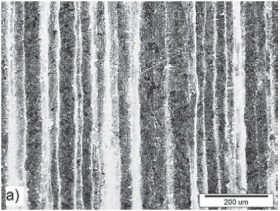
Development of banded microstructure in 34CrNiMo6 steel

2016-04-18_22h49_18

A paper published in « METALURGIJA 55″ (2016) 3, 329-332

In this paper the development of a banded microstructure in hot-rolled 34CrNiMo6 steel which consisted of bainitic  and martensitic bands is explained. The continuous
cooling transformation (CCT) diagrams of steel were calculated. They confirmed the formation of martensite in  positive segregations and the formation of bainite in negative ségrégations.

Read the paper

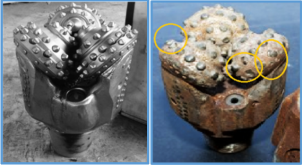
Modes of failure of cemented tungsten carbide tool bits : A study of wear parts

2016-04-18_22h29_00An article published in « International Journal of Refractory Metals and Hard Materials », july 2015.

Tungsten carbide alloyed with cobalt (WC/Co) shows unique characteristics like high strength at elevated temperature and high mechanical and chemical resistance that makes carbide tools appropriate for cutting, drilling, mining and machining operation. A whole failure study is revealed within the paper. This study also discusses the failure mode of a tungsten carbide tools, its prediction and remedies.

Read the paper


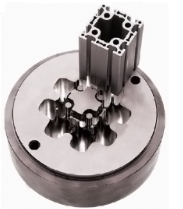
PVD CrN-coated die for aluminy hot extrusion

2016-04-18_22h16_19The study shows that considerable reserves still exist for increasing the service times of CrN-coated  dies for Al hot extrusion. The main reasons for the decreased service times are revealed and explained regarding  the selected CrN-coated die for hot extrusion, i.e. why the service time of the coated-die is not in accordance with  the wear resistance of the CrN-coating. The shaping of the bearing surface and presence of the scratches, size and  amount of nonmetalic inclusions in the die steel, nodular defects in the CrN-coating, as well as thicknesses uniformity  of CrN-coatings along the bearing surface, are relevant influential parameters.

Read the paper.

Fracture analysis of U71Mn rail flash-butt welding joint

An other case study published in « Case Studies in Engineering Failure Analysis« , october 2015.

This paper mainly investigates the fracture problem of U71Mn rail flash-butt welding joint. The analysis results show that the welding joint is fatigue fracture, and the fracture surface morphology is the cleavage fracture characteristics.

Source : Fracture analysis of U71Mn rail flash-butt welding joint

Cas Concrets – Des pales et hélices défaillantes

Avatar Cas ConcretsTrois cas d’analyses de défaillances survenues en service : hélices de navires et pale de ventilateur. Ces trois fiches d’analyse de défaillance avaient été publiées en 1984 dans la revue Cetim-information. Des dizaines de milliers de cas ont été traités ces quarante dernières années par le Cetim. Cette expérience fait du Centre une référence dans le domaine à même d’intervenir dans tous les secteurs d’activités. Avec aujourd’hui ses centres associés et partenaires, l’Institut technologique Cetim met un ensemble de compétences et de moyens au service des industriels et experts pour analyser, comprendre et proposer des solutions permettant d’éviter la reproduction de ces défaillances. Les différentes expertises de cette série « Cas concrets » sont issues d’articles publiés dans la revue Cetim Informations dans les années 74 à 90. Bien que ces fiches traitant de cas concrets soient anciennes, leur contenu est toujours d’actualité…

Source : Cas Concrets – Des pales et hélices défaillantes – Cetim – Centre technique des industries mécaniques