A Review on Application of Bellows Expansion Joints and Effect of Design Parameters on System Characteristics

metal_bellowsA paper published in the « Indian Journal of Science and Technology« , august 2016.
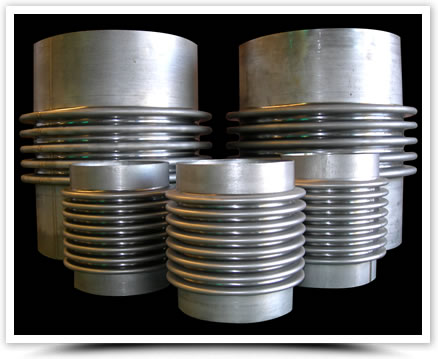
A bellows expansion joint is an assembly of two or more bellows which help to tackle expansion or contraction in the system where it is designed to fit in. It was found, various independent researchers did lot of research in the design and geometry of bellows expansion joint but a review of all is scare, they have put forth the different possible features of bellows design in this paper. (…)

Read more

Failure investigations of a first stage Ni based super alloy gas turbine blade

2016-10-25_17h11_11A paper presented at the « International Conference on Processing of Materials, Mineral and Energy », 29th and 30th july 2016, PACE Institute of Technology & Sciences, India. It had been published by Elsevier.

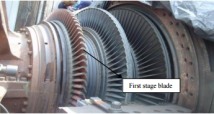
This paper deals with the failure investigations of the first stage gas turbine blade of 30MW gas turbine. This blade is manufacture with of nickel based super alloy IN738. The main focus of the paper is to found the causes of failure of the blade. By the investigations, it is found that the blade failure takes place due to the combined effect of erosion, oxidation, overheating, and hot corrosion.

More at : http://www.pmme.co.in/papers/EMT-087.pdf

Comparative study of Fatigue Analysis of Pop up (Blind) Riveted with Solid Riveted Lap joint

2016-10-25_16h45_34An article published in the « International Journal of Engineering Science and Computing », June 2016.

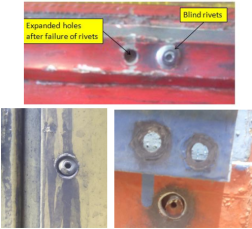
This paper study failure observed in riveted joint in buses and give solution to overcome this failure. In this stress analysis, fatigue analysis of pop up (Blind) riveted joint and Solid riveted lap joints are studied and from that predict the maximum shear strength of riveted joint to resist shear failure and no. of cycles of riveted joints. Also study the behavior of stresses and fracture observed on the Riveted due to stresses. This study is done by CAD software CATIA V5, CAE software Abaqus and correlate with analytical solution.

Read more

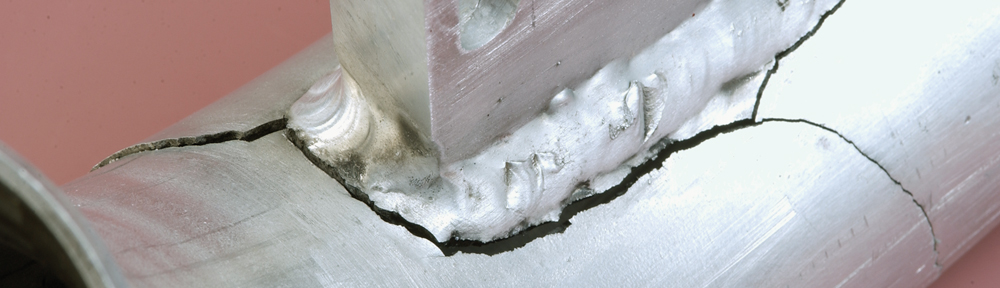
Grooving corrosion of seam welded oil pipelines

A interesting paper in « Case study in Engineering Failure Analysis«  published on ScienceDirect.com.

24″ pipeline carrying oil was failed in the form of longitudinal crack at the 6 O’clock position resulting in oil spill. The failed pipe was investigated to reveal the main cause of its failure. Cracks were originated from weld defected sites, initiated by grooving corrosion, propagated by inertia at the normal designed pressure condition, and stopped when stress relief is attained.

Read more

Critical areas of transmission towers due to sudden removal of members

2015-10-19_14h15_28An article on power transmission tower  structure published in « Case Studies in Engineering Failure Analysis » of october 2015.

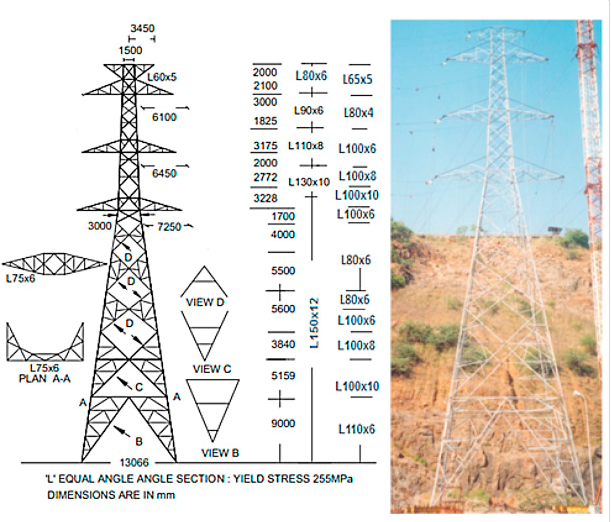
In this study, the structural susceptibility of a 400 kV power transmission tower as well as various methods of determining the critical areas of above mentioned structure are investigated.The critical areas of the transmission tower through impact factor and capacity-to-demand ratio are determined so that it will be more feasible to propose retrofitting methods for the damaged structure in order to prevent the future risks. It is concluded that the impact factor corresponds with the capacity-to-demand ratio in 41% of APM cases.

Read more

A failure analysis of a prestressed steel cable of a suspension bridge

AS_267786534518800@1440856693175A case study published in « Case Studies in Construction Materials », 06/2015.This paper presents results of a failure analysis study to characterize the damage phenomenon that occurred in prestressed steel cables of a suspension bridge. Results from fatigue tests and fractographic study allow to the conclusion that the main cause of cable failure, which led to a collapse of the bridge, was stress corrosion cracking (SCC).

Read more


Investigation of Stress Intensity Factor of Axial Compressor Blade of Helicopter

2015-10-19_15h08_00An article published in the « International Journal of Ethics in Engineering & Management Education » of july 2015.

Compress blade fails under several factors like high cycle fatigue, due to high rotational velocity, corrosiveness area, due to impinging foreign particle on compressor blade and also hard landing. This paper presents the failure analysis of compressor blade of helicopter engine.

Read more


EFFECT ANALYSIS OF AN ARC-STRIKE-INDUCED DEFECT ON THE FAILURE OF A POST-TENSIONED THREADBAR

A new article available online 10 November 2015 in « Case Studies in Engineering Failure Analysis ».

A temporary threadbar used for precast segmental construction broke during the post-tensioning stage before reaching the service load. Failure analysis showed that the premature failure of the bar was due to the presence of an arc strike. The arc strike effects on the material and threadbar integrity are studied. Read more….


Mechanics of Collapse of WTC Towers

A telechargementpaper published in september 2016 on www.civil.northwestern.edu .

Abstract : The previously formulated model of the gravity-driven collapse of the twin towers of the World Trade Center on 9/11/2001 was shown to match all the existing observations, including the video record of the crush-down motion of the top part of tower during the first few seconds, the seismically recorded duration of collapse, the size distribution of particles caused by impact comminution of concrete floor slabs, the loud booms due to near-sonic lateral ejection velocity of air and dust, and precedence of the crush-down collapse mode before the crush-up. Nevertheless, di↵erent degrees of ductility, fracturing and end support flexibility of WTC columns could lead to an equally good match of these observations and remained uncertain, due to lack of test data. Recently, Korol and Sivakumaran reported valuable experiments that allow clarifying this uncertainty. They reveal that, under the assumptions of rigid end supports and unlimited ductility (or no fracturing), the energy dissipation in the WTC columns would have been at maximum 3.5-times as large as that calculated by the plastic hinge mechanism normally considered for small deflection buckling. This increase would still allow close match of all the aforementioned observations except for the first two seconds of the video. The proper conclusion from Korol and Sivakumaran’s tests, based on close matching of the video record, is that the fracturing of columns and the flexibility of end restraints must have significantly reduced the energy dissipation in columns calculated under the assumptions of no fracture and no end restraint flexibility.

Read more

Undercutting Formation Mechanism in Gas Metal Arc Welding

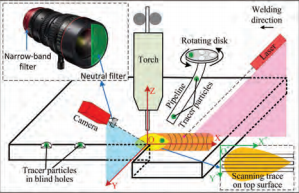
2016-06-04_07h59_57A vision­based sensing system was improved to acquire 2D images of weld pool shape and tracer particle movement simultaneously. …..

Based on analysis of tracer particle movement, roles of different associated forces, such as gravity, arc drag force, Maragoni force, magnetic force, droplet impact, and viscous force, were investigated. The results show that liquid metal under the arc decreases to a thin liquid layer if the welding speed is more than 1.0 m/min. This phenomenon makes viscous resistance increase in the thin liquid layer, which impedes transverse spreading of liquid metal. Thus, it is difficult for the weld toe to be filled by molten metal. Meanwhile, experiments revealed the amount of forward molten metal can be ignored in the front and middle of the weld pool. Therefore, it is difficult for the weld toe to be filled by the backward molten metal. As a result, undercutting defects appear during high­speed welding……..

More