Rolling element bearing failure analysis: A case study

A paper published in « Case Studies in Engineering Failure Analysis« , january 2013

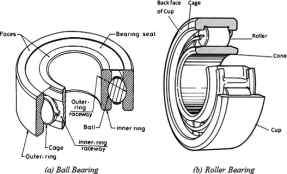
This paper addresses Rolling Contact Fatigue (RCF) occurs due to the result of cyclic stress developed during operation and mechanism that involve in fretting failure of rolling element bearing. As bearing raceways of non-rotating rolling element bearings exposed to vibration or sliding oscillation false Brinelling occurs. Bearing surface due to false Brinelling tends to damage within a short period, due to cavities created on the bearing raceway. Recommendation towards enhancement of bearing life is also suggested.
Read more …

Cracking of underground welded steel pipes caused by HAZ sensitization

An article on case study, published in « Case Studies in Engineering Failure Analysis« , on january 2013.

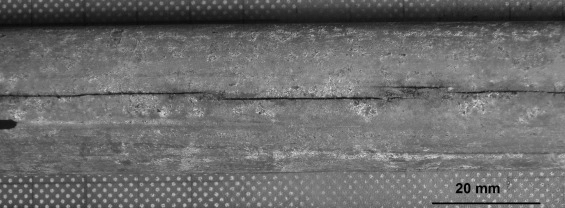
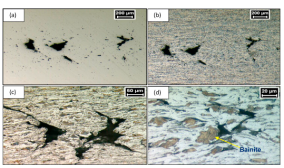
Low alloy steel welded pipes buried in the ground were sent for failure analysis investigation. Failure of steel pipes was not caused by tensile ductile overload but resulted from low ductility fracture in the area of the weld, which also contains multiple intergranular secondary cracks. The failure is most probably attributed to intergranular cracking initiating from the outer surface in the weld heat affected zone and propagated through the wall thickness.

Read more ….

Metallurgical investigation of different causes of center bursting led to wire breakage during production

2016-11-03_09h22_22A case study published in « Case Studies in Engineering Failure Analysis« , on january 2013.

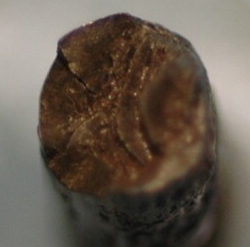
Central bursting cause problem as it is hard to detect by means of surface check. In this paper, three broken wires which failed during production were investigated. In first two wires breakage took place due to formation of hard and brittle phase. In third case failure took place due to inappropriate drawing operations.

Read more

Analysis of corroded elbow section of carbon steel piping system of an oil–gas separator vessel

An interessant case study published in « Case Studies in Engineering Failure Analysis« , on 09january 2013.

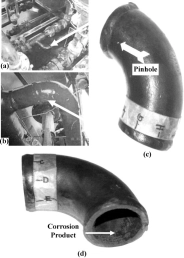
A pinhole in elbow section of oil piping system is formed by localized corrosion. The corrosion is found to result from sequential chlorination and sulfidation reactions : the chlorination results from hydrolysis of calcium chloride in the crude oil and the sulfidation results from hydrogen sulfide in the crude oil.

Read more …

A Review on Application of Bellows Expansion Joints and Effect of Design Parameters on System Characteristics

metal_bellowsA paper published in the « Indian Journal of Science and Technology« , august 2016.

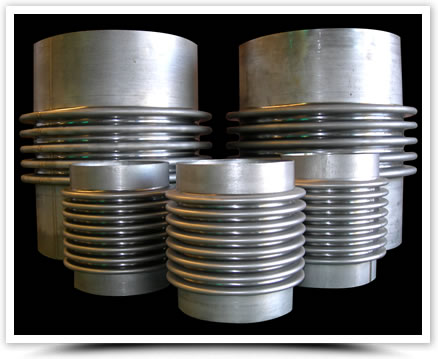
A bellows expansion joint is an assembly of two or more bellows which help to tackle expansion or contraction in the system where it is designed to fit in. It was found, various independent researchers did lot of research in the design and geometry of bellows expansion joint but a review of all is scare, they have put forth the different possible features of bellows design in this paper. (…)

Read more

Failure investigations of a first stage Ni based super alloy gas turbine blade

2016-10-25_17h11_11A paper presented at the « International Conference on Processing of Materials, Mineral and Energy », 29th and 30th july 2016, PACE Institute of Technology & Sciences, India. It had been published by Elsevier.

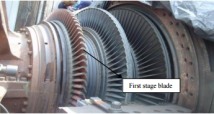
This paper deals with the failure investigations of the first stage gas turbine blade of 30MW gas turbine. This blade is manufacture with of nickel based super alloy IN738. The main focus of the paper is to found the causes of failure of the blade. By the investigations, it is found that the blade failure takes place due to the combined effect of erosion, oxidation, overheating, and hot corrosion.

More at : http://www.pmme.co.in/papers/EMT-087.pdf

Comparative study of Fatigue Analysis of Pop up (Blind) Riveted with Solid Riveted Lap joint

2016-10-25_16h45_34An article published in the « International Journal of Engineering Science and Computing », June 2016.

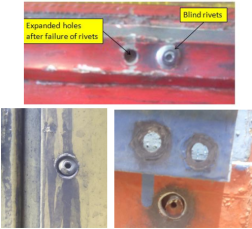
This paper study failure observed in riveted joint in buses and give solution to overcome this failure. In this stress analysis, fatigue analysis of pop up (Blind) riveted joint and Solid riveted lap joints are studied and from that predict the maximum shear strength of riveted joint to resist shear failure and no. of cycles of riveted joints. Also study the behavior of stresses and fracture observed on the Riveted due to stresses. This study is done by CAD software CATIA V5, CAE software Abaqus and correlate with analytical solution.

Read more

Grooving corrosion of seam welded oil pipelines

A interesting paper in « Case study in Engineering Failure Analysis«  published on ScienceDirect.com.

24″ pipeline carrying oil was failed in the form of longitudinal crack at the 6 O’clock position resulting in oil spill. The failed pipe was investigated to reveal the main cause of its failure. Cracks were originated from weld defected sites, initiated by grooving corrosion, propagated by inertia at the normal designed pressure condition, and stopped when stress relief is attained.

Read more

Critical areas of transmission towers due to sudden removal of members

2015-10-19_14h15_28An article on power transmission tower  structure published in « Case Studies in Engineering Failure Analysis » of october 2015.

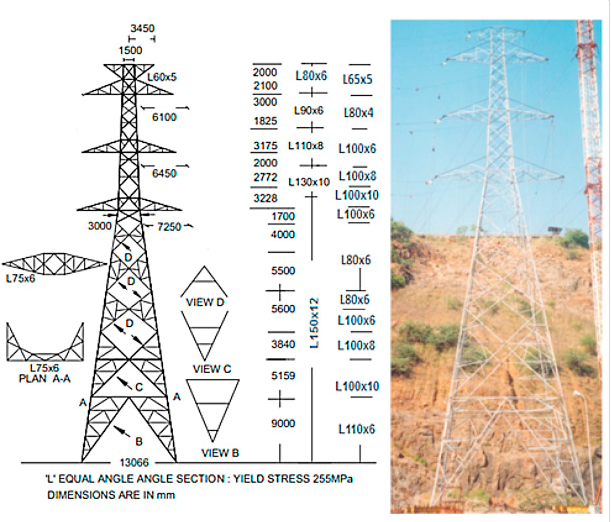
In this study, the structural susceptibility of a 400 kV power transmission tower as well as various methods of determining the critical areas of above mentioned structure are investigated.The critical areas of the transmission tower through impact factor and capacity-to-demand ratio are determined so that it will be more feasible to propose retrofitting methods for the damaged structure in order to prevent the future risks. It is concluded that the impact factor corresponds with the capacity-to-demand ratio in 41% of APM cases.

Read more

A failure analysis of a prestressed steel cable of a suspension bridge

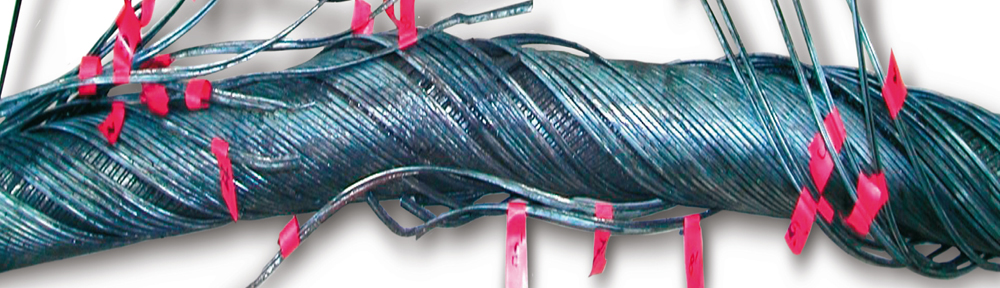
AS_267786534518800@1440856693175A case study published in « Case Studies in Construction Materials », 06/2015.This paper presents results of a failure analysis study to characterize the damage phenomenon that occurred in prestressed steel cables of a suspension bridge. Results from fatigue tests and fractographic study allow to the conclusion that the main cause of cable failure, which led to a collapse of the bridge, was stress corrosion cracking (SCC).

Read more