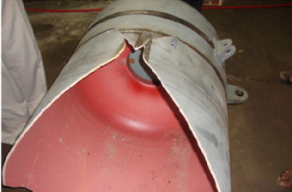
Catastrophic failure of a carbon steel storage tank due to internal corrosion

A paper published in « Case Studies in Engineering Failure Analysis« , available on sciencedirect.com.

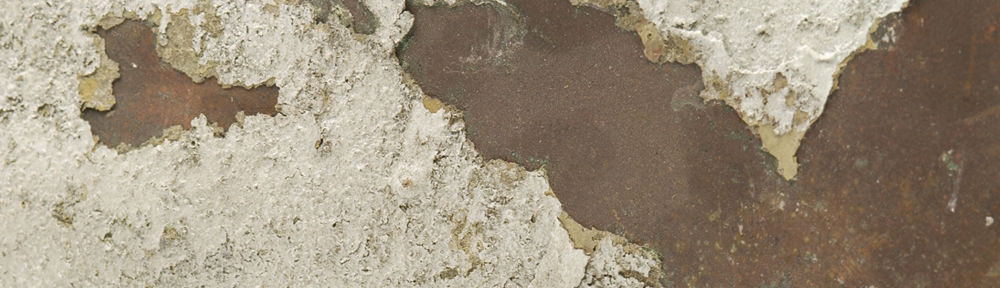
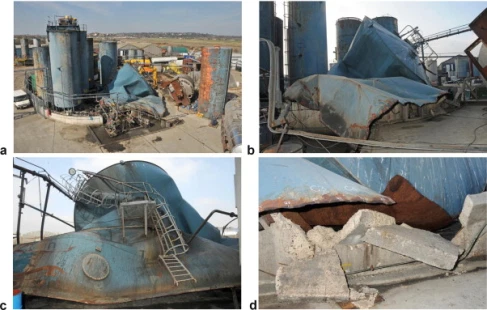
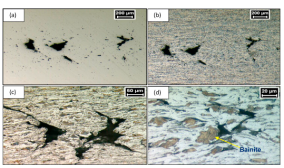
Catastrophic failure of a 10 m high, 8 m diameter steel storage tank containing approximately 350 m3 of waste solvent led to a significant environmental incident in 2009. An investigation was carried out to establish the root cause and to learn lessons that might prevent a reoccurrence.

Read more …

Failure analysis of a high strength low alloy  steel pressure vessel

2016-11-16_18h21_36A paper published in « Case Studies in Engineering Failure Analysis« , available on sciencedirect.com.

High strength low alloy (HSLA) steel with a nominal composition of 0.15C–1.25Cr–1Mo–0.25V is being extensively used in space programme. Owing to its ease of fabrication and welding, a tank was fabricated out of this alloy. The tank is used to contain strontium per chlorate which on combustion develop secondary thrust, effectively used during attitude control of satellite launch vehicle. During one of the routine qualification tests, a tank had failed at an internal pressure of 109 bar, against a designed proof pressure of 120 bar.

Failure was initiated from long seam weld of a cylindrical shell and propagated into the parent material thereafter. Detailed metallurgical investigation has been carried out to understand the cause of failure. This paper brings out the detail of investigation carried out.

Read more ….

Rolling element bearing failure analysis: A case study

A paper published in « Case Studies in Engineering Failure Analysis« , january 2013

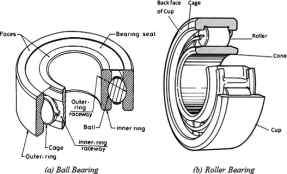
This paper addresses Rolling Contact Fatigue (RCF) occurs due to the result of cyclic stress developed during operation and mechanism that involve in fretting failure of rolling element bearing. As bearing raceways of non-rotating rolling element bearings exposed to vibration or sliding oscillation false Brinelling occurs. Bearing surface due to false Brinelling tends to damage within a short period, due to cavities created on the bearing raceway. Recommendation towards enhancement of bearing life is also suggested.

Read more …

Cracking of underground welded steel pipes caused by HAZ sensitization

An article on case study, published in « Case Studies in Engineering Failure Analysis« , on january 2013.

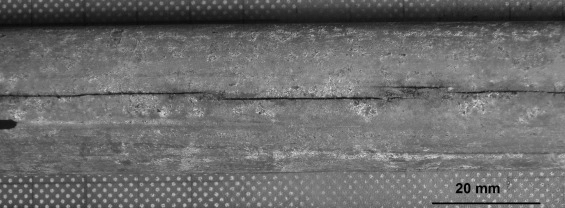
Low alloy steel welded pipes buried in the ground were sent for failure analysis investigation. Failure of steel pipes was not caused by tensile ductile overload but resulted from low ductility fracture in the area of the weld, which also contains multiple intergranular secondary cracks. The failure is most probably attributed to intergranular cracking initiating from the outer surface in the weld heat affected zone and propagated through the wall thickness.

Read more ….

Metallurgical investigation of different causes of center bursting led to wire breakage during production

2016-11-03_09h22_22A case study published in « Case Studies in Engineering Failure Analysis« , on january 2013.

Central bursting cause problem as it is hard to detect by means of surface check. In this paper, three broken wires which failed during production were investigated. In first two wires breakage took place due to formation of hard and brittle phase. In third case failure took place due to inappropriate drawing operations.

Read more

Analysis of corroded elbow section of carbon steel piping system of an oil–gas separator vessel

An interessant case study published in « Case Studies in Engineering Failure Analysis« , on 09january 2013.

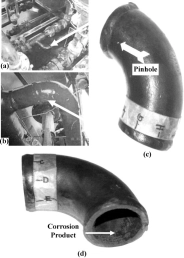
A pinhole in elbow section of oil piping system is formed by localized corrosion. The corrosion is found to result from sequential chlorination and sulfidation reactions : the chlorination results from hydrolysis of calcium chloride in the crude oil and the sulfidation results from hydrogen sulfide in the crude oil.

Read more …

Comprendre et anticiper les défaillances sur plastiques, composites et élastomères

2016-11-03_08h56_38

Le Cetim a développé depuis de nombreuses années des compétences spécifiques sur les matériaux composites, plastiques ou élastomères, portées par de grands projets de recherche applicative. Par sa connaissance approfondie des matériaux composites, élastomères, et des procédés qui leur sont associés, le Cetim est le spécialiste français des analyses matériaux, et s’engage pour vous apporter dans les meilleurs délais les éléments nécessaires à la résolution des cas des plus basiques aux plus complexes. La reconnaissance de ses clients, ainsi que la mise en place du centre composite « Technocampus« , de mise en commun de moyens d’analyses, place le Cetim comme un des premiers acteurs du domaine.

Plus d’informations

A Review on Application of Bellows Expansion Joints and Effect of Design Parameters on System Characteristics

metal_bellowsA paper published in the « Indian Journal of Science and Technology« , august 2016.

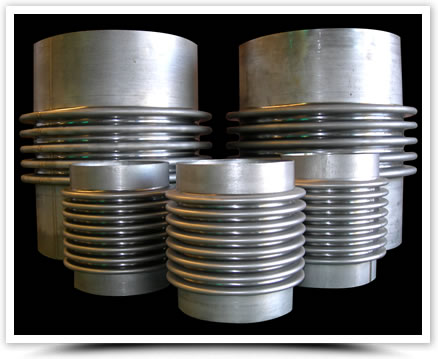
A bellows expansion joint is an assembly of two or more bellows which help to tackle expansion or contraction in the system where it is designed to fit in. It was found, various independent researchers did lot of research in the design and geometry of bellows expansion joint but a review of all is scare, they have put forth the different possible features of bellows design in this paper. (…)

Read more

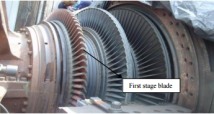
Failure investigations of a first stage Ni based super alloy gas turbine blade

2016-10-25_17h11_11A paper presented at the « International Conference on Processing of Materials, Mineral and Energy », 29th and 30th july 2016, PACE Institute of Technology & Sciences, India. It had been published by Elsevier.

This paper deals with the failure investigations of the first stage gas turbine blade of 30MW gas turbine. This blade is manufacture with of nickel based super alloy IN738. The main focus of the paper is to found the causes of failure of the blade. By the investigations, it is found that the blade failure takes place due to the combined effect of erosion, oxidation, overheating, and hot corrosion.

More at : http://www.pmme.co.in/papers/EMT-087.pdf

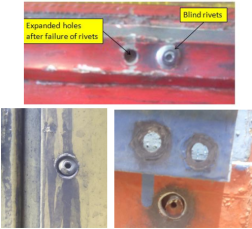
Comparative study of Fatigue Analysis of Pop up (Blind) Riveted with Solid Riveted Lap joint

2016-10-25_16h45_34An article published in the « International Journal of Engineering Science and Computing », June 2016.

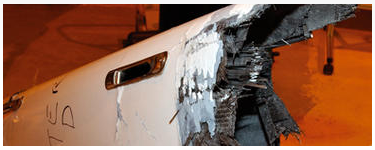
This paper study failure observed in riveted joint in buses and give solution to overcome this failure. In this stress analysis, fatigue analysis of pop up (Blind) riveted joint and Solid riveted lap joints are studied and from that predict the maximum shear strength of riveted joint to resist shear failure and no. of cycles of riveted joints. Also study the behavior of stresses and fracture observed on the Riveted due to stresses. This study is done by CAD software CATIA V5, CAE software Abaqus and correlate with analytical solution.

Read more