Design and failure modes of automotive suspension springs

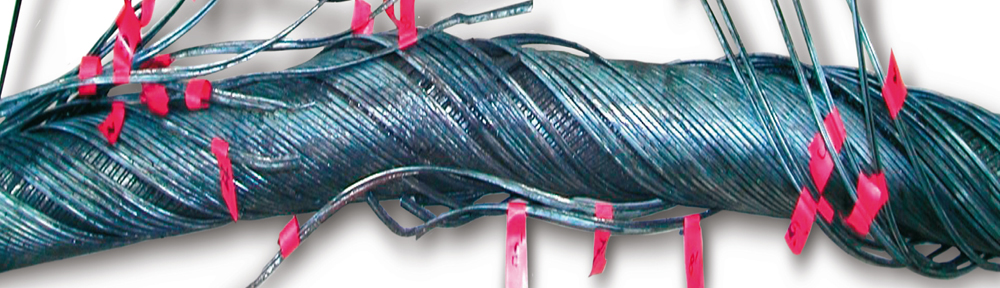
An interesting publication in « Engineering Failure Analysis » of Decembre 2008. This paper is a discussion about automotive suspension coil springs, their fundamental stress distribution, materials characteristic, manufacturing and common failures. An in depth discussion on the parameters influencing the quality of coil springs is also presented.

Acceder article

Failure Analysis of a Helical Compression Spring for a Heavy Vehicle’s Suspension System

An interesting  paper in « Case study in Engineering Failure Analysis » published on ScienceDirect.com. This paper analyzed why a compression coil spring fractured at the transition position from the bearing coil to the first active coil in service, while the nominal stress here should always be much less than that at the inside coil position of a fully active coil. Visual observations indicated that a wear scar was formed on the first active coil and the fracture surface showed radiating ridges emanating from the wear scar. Scanning electron microscopy examination showed crescent shaped region and beach marks, typical of fatigue failure. ZnCaph phosphate layer and painting around the contact zone were worn out due to contact and friction and resulted in corrosion and corrosion pits induced local stress concentration. Stress analysis indicated severe stress singularities at the edges of the contact zone, which facilitated cycle slip and fatigue crack nucleation. Recommendations were also made for improving the fatigue performance of the suspension springs.

Acceder article


Observing early stage rail axle bearing damage

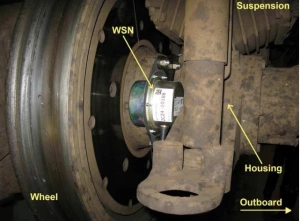
Railway bearingA paper presented   at the Sixth International Conference of Engineering Failure Analysis on July 2014 in Lisbon – Protugal. This paper brings out the detail of investigation carried out on failing  rail axle bearing.

A novel condition monitoring system has for the first time enabled reliable extraction from service and detailed forensic examination of failing rail axle bearings, before the usual catastrophic destruction of the evidence. Computed Tomography has been used to produce a map of the damage allowing targeted sectioning of subsurface cracking. Traditional metallographic techniques have revealed large white etched layers associated with the subsurface cracking, while observations with a scanning electron microscope have confirmed rolling contact fatigue crack propagation, possibly initiated from pre-existing electrical arcing damage of the raceways.

telecharger le doc

Reduction in diversion due to coil break in CRNO grades of coils

A new « Case study in Engineering Failure Analysis » published on ScienceDirect.com.

This paper reports investigations after diversion due to coil break in cold rolled non oriented (CRNO) grades of coils showed an increasing trend during Jan–May’12 at Silicon Steel Mill (SSM), Rourkela Steel Plant (RSP). Coil break increased from a level of less than 1% during to a level of 30% in May’12. Samples from hot rolled coils and finished coils were taken and detailed metallurgical investigation was carried out to ascertain the genesis of such defects. Further studies were carried out in the processing lines and material flow was tracked from steel making to final product. The probable reasons were identified and corrective measures were taken leading to reduction in diversion due to coil break less than 2%.

Acceder article

Failure analysis of a vibration isolator used in launch vehicle applications

A new paper published in « Case study in Engineering Failure Analysis »  on ScienceDirect.com.

Vibration isolators are used in launch vehicles to protect sensitive electronic equipments from the rigors of flight structural vibrations during the lift-off and ascent phase. Failure of one such vibration isolator made of AISI 304 is reported in the present study after ground level testing has been completed.  Finally, it was concluded that micro cracks formed during the deep drawing operation due to large strains at the fore end corner propagated during vibration testing resulting in the failure of the body of the vibration isolator.

Acceder article


Analysis and Performance of Automobile Engine Components

couvertureThis paper was published in « International Journal of Innovative Research in Science, Engineering and Technology ». This paper presents an investigation report of effect of various parameters which affect the performance of an automobile engine. Almost all internal combustion engines have at least one connecting rod to transmit the thrust of the piston to the crankshaft, and as the result the reciprocating motion of the piston is translated into rotational motion of the crankshaft. From the viewpoint of functionality, connecting rods must have the highest possible rigidity at the lowest weight capable to withstand varying loads. It has been found that structural failure of various components results in engine missing and starts producing noise and vibration during racing, mileage gets affected and black or white smoke arise also pickup gets reduced. In automobile industry damaged or broken parts are generally too expensive to replace or repair especially in case of engine. In this concern we presented detailed analysis of causes along with preventive maintenance suggestion schedule for better engine life.

telecharger le doc

CRANKSHAFT FAILURE DUE TO FATIGUE—A REVIEW

couvertureAn interresting paper published in « International Journal of Mechanical Engineeering and Robotics Research« . This paper focuses on the failure of crankshaft due to fatigue which are put into service in several aplications. Crankshaft is important part in al types of engines employed in aplications like aircraft, reciprocating compresor, marine engine, vehicle engine as wel as diesel generator. The failure of crankshaft is due to fatigue resulting into cracks on the surface of crankshaft and efect of residual streses due to filet roling proces. The motivation behind this paper is to study how fatigue phenomenon leads to the failure of the crankshaft.

telecharger le doc

Fracture mechanisms of failed IN-738LC gas turbine blades

An interesting  paper in « Case study in Engineering Failure Analysis » published on ScienceDirect.com. This paper outlines the problem of blades failure occurred because of excessive temperature exposure. Nickel based superalloys are widely used as gas turbine blade material. They suffer from microstructural instabilities and environmental damages. Creep properties of alloy was deteriorated by γ‘ particles dissolution.

Acceder article


Brittle fracture of a grade E cast steel knuckle

A new paper in « Case study in Engineering Failure Analysis » published on ScienceDirect.com. This paper investigated the brittle fracture mechanism of a grade E cast steel knuckle that is one of the key components of the coupler for railway wagon.

Acceder article

A failure study of the railway rail serviced for heavy cargo trains

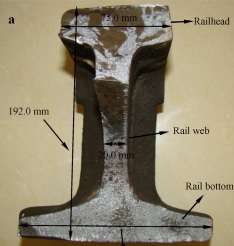
rail fractureA paper published in« Case study in Engineering Failure Analysis »In this case study, a failed railway rail which was used for heavy cargo trains was investigated in order to find out its root cause. The crack is supposed to be initiated from the weaker ferrite networks. Given all of that, the failed railway rail is considered to be caused by overload. It is of great importance to improve the welding technology, and control the load of train in order to prevent similar failure in future.

telecharger le doc