Study on the creep behavior of bonded metallic joints

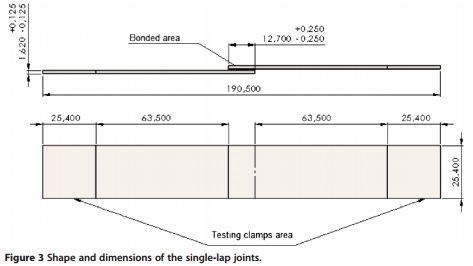
a test specimenBonded joints have been used as the main alternative to join components made of different materials or not. Literature shows that although prior studies focused on the characterization of several mechanical properties related to joints, little is known about the creep behavior of bonded joints. This work  studies the behavior of single-lap joints (SLJ) made of metallic substrate and bonded with epoxy and polyurethane adhesives. Results show that, for long term applications, the average tensile strength isn’t enough to guarantee project safety. An initial model for the creep behavior of bonded joints is proposed.

Cliquez pour télécharger le texte complet de l’article paru via :  http://www.appliedadhesionscience.com/content/pdf/2196-4351-2-8.pdf
Mécanique de la rupture fragile et de l’endommagement : approches statistiques et probabilistes LAMON Jacques: Librairie Lavoisier

A LavoisierCet ouvrage de Jacques Lamon a été publié chez Lavoisier en septembre 2007. Il analyse le phénomène de la rupture fragile, son caractère aléatoire et les conséquences de la présence de populations de défauts dans les matériaux. Il présente les approches stochastiques de la rupture fragile et les méthodes de prévision sous des conditions diverses. Il étudie divers modèles tels que celui de Weibull et des approches plus fondamentales qui reposent sur la loi de distribution des défauts et le concept de contrainte élémentaire multiaxiale. Ce livre s’adresse à tous ceux qui s’intéressent à la rupture fragile, aux approches probabilistes, aux prévisions, aux matériaux fragiles quels qu’ils soient céramiques, béton, fibres… à leur combinaison au sein de composites, de multicouches, ou de structures. Il aborde les aspects théoriques mais aussi expérimentaux. Il est illustré d’exemples et de cas d’étude.

Pour en savoir plus : LAMON Jacques: Librairie Lavoisier.

Interfering part of a steam turbine journal bearing

bearing part frettingJournal bearings as so sensitive parts of steam turbines are very susceptible to failure through different mechanisms of wear, fatigue and crush during service conditions. Failure occurring through these mechanisms lead to turbine completely shut down as a result of interfering in working conditions of bearing different parts. In this research, failed interfered part of a journal bearing related to a 320,000 kW steam turbine was examined.The studies were revealed that the bearing part loosing and inappropriate clearance can produce relative displacements under cyclic gradient loading. This condition was detrimental for the service life of turbine journal bearing via failure through fretting fatigue mechanism.

Acceder article

Failure analysis of a pelton impeller

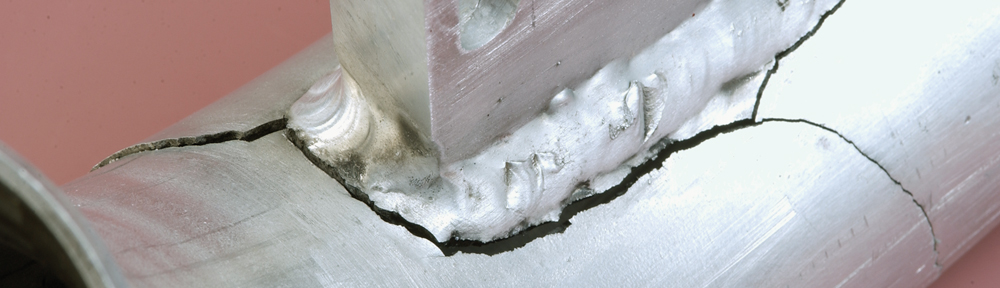
A new topic on « http://www.sciencedirect.com/« .This paper, published in « Engineering Failure Analysis« , presents the analysis of a 16-bucket Pelton impeller from a hydroelectric plant in Colombia, a plant with two turbo generators with a nominal capacity of 2.33 MW each. Multiple cracks were detected one year subsequent to geometry reconstruction welding repair.

Acceder article

Case Studies in Marine Concentrated Corrosion

A new paper in « Case study in Engineering Failure Analysis » published on ScienceDirect.com. This paper outlines the problem and analysis techniques in three exemplar case studies of marine concentrated corrosion. The paper includes an outline of some of the relevant literature relating to the use of these modern techniques in identifying marine corrosion products.

Acceder article

Actuator Fault Diagnosis Based on the Valve Friction

ActuatorControl valve (actuator) is the frequently moving terminal Instrument of the control system. To avoid  the leaking of the actuator, there is packing at the moving parts. However, the friction caused by the packing can do harm to the control of the system. The washing effect of the media, high temperature, high pressure, frequent movement and other effects can result in the leaking of the packing and the deformation of the valve stem, which causes the change of the friction. In this paper, published in Sensors & Transducers, Vol. 177, Issue 8, August 2014, it’s theoretically analyzed the relationship of the friction of the packing and the static performance of the control valve, and offered a method to check the quality of the moving parts by attaching a strain gage (strain rosette) to the empty part of the valve stem. This method has been demonstrated via experiment and a method to do error detection is provided at last. Paper published by http://www.sensorsportal.com/.

telecharger le doc

Corrosion in Fire Protection Systems

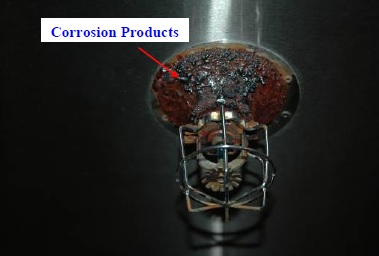
Sprinkler corrosionA paper published on  the site of FM Global. The purpose of this technical report is to  explain corrosion in fire protection systems (FPS). Factors such as pipe weld corrosion, residual water in dry pipe systems, trapped air in wet pipe systems, microbiologically influenced corrosion, and corrosive water chemistry are discussed. A corrosion resistant sprinkler system for highly corrosive exhaust  duct is also addressed. This report provides the basis for development of corrosion mitigation strategies of existing FPS and lays out directions for further study on corrosion mitigation and management of FPS.

telecharger le doc

Hydrogen embrittlement in steel fasteners

hydrogen embrittlementThis paper is published on http://www.boltcouncil.org by Salim Brahimi, President at IBECA Technologies Corp, Chairman, Committee F16 (Fasteners) at ASTM International, The objective of this paper is to distil the latest knowledge related to hydrogen embrittlement into know-how in a manner that is complete yet simple, and directly applicable to fasteners. The topic is divided into basic components. First is a description of the theory and mechanism of hydrogen damage, followed by a discussion of conditions that are necessary for hydrogen embrittlement failure to occur. The fundamentals are followed by a description of HE test methods, guidelines for processing, surface cleaning, coating (particularly electroplating), and baking.

telecharger le doc

Analysis of cracks generated in the spinning-mandrel teeth

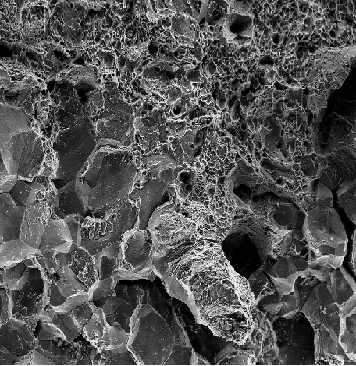
A new paper in « Case study in Engineering Failure Analysis » published on  ScienceDirect.com. The spinning process, using a splined mandrel, is always prone to premature failure of the splined mandrels. Such a failure is thought to be related to the magnitude of the forming forces exerted on the mandrel by the forming rollers during the spinning process. In the present paper, the characteristic of corner cracks in the mandrel teeth (made of S7 tool steel) of a spinning process has been investigated. Fractography analyses using scanning electron microscopy (SEM) clearly confirm “fatigue” as being the main reason for the failure.

Acceder article