A failure analysis study on the fractured connecting bolts of a filter press

An interesting case study of failure analysis will be published in Case Studies in Engineering Failure Analysis in October 2015
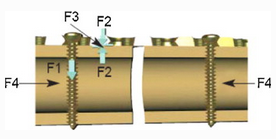
The purpose of this study was to investigate the main causes of the co-fracture of sixteen connecting bolts of a filter press cylinder–piston system. Stress state of the bolts during the service conditions has been analyzed and the failure reasons were determined from the fractography analysis and gathered information. According to the obtained results, it was concluded that the bolts had failed by the fatigue mechanism. It seems that insufficient torque was used during assembly.

Read more at : A failure analysis study on the fractured connecting bolts of a filter press

A failure Study of a locking compression plate implant

2015-05-03_11h57_31


An interesting  paper in « Case study in Engineering Failure Analysis » published on ScienceDirect.com. In this case study a failed locking compression plate was investigated. Such plating systems are used to provide the stability to fractured bone and fixation. The locking compression plate had been separated in two pieces. One of the fracture surfaces from the failed component was investigated for surface topographical features. The visual, optical and scanning electron microscopy results indicated the presence of beach marks, intermetallic inclusions, corrosion pits and striations indicating fatigue crack propagation and overload failure. Some corrosion damage also was documented on the fractography. This case study shows that corrosion may have initiated fatigue crack which grew by the activities of daily living causing the failure.

To read the article click here

Rupture d’une roue conique d’un moteur d’hélicoptère

The Transportation Safety Board of Canada a publié sur son site les résultats de l’enquête menée à la suite de l’accident d’un hélicoptère Aerospatiale AS 350 B3.

L’examen du moteur a permis de déterminer que la roue conique à 41 dents (référence 0292127330) s’était brisée à cause d’une fissuration de fatigue polycyclique. La roue avait été posée au moment de la fabrication du moteur, et elle totalisait 1644 heures de vol depuis sa mise en service initiale. L’examen métallurgique de la roue a révélé nombre de criques de fatigue prenant naissance à la base de nombreuses dents. Des criques de fatigue circulaires ont également été découvertes en bordure de la roue. Celle-ci ne présentait aucun défaut de fabrication qui aurait pu véritablement contribuer à sa défaillance.

Lien vers le rapport d’expertise :Transportation Safety Board of Canada – Aviation Investigation Report A07O0314.

Rupture d’un ressort de suspension de voiture

Un cas concret d’analyse de défaillance rapporté par ScienceDirect.com et publié dans « Case study in Engineering Failure Analysis ».

Un dommage du revêtement anti-corrosion associé à un processus de fatigue est responsable de cette défaillance.

Pour lire l’article cliquez ici

Textes des conférences de la 5ème édition, Fatigue Design, 2013

2015-02-01_11h28_58 Les textes des conférences de la 5 e édition, Fatigue Design, la conférence internationale de la conception vis-à-vis de la fatigue, sont en ligne sur SciencDirect.com. Biennale reconnue et attendue de la conception vis-à-vis de la fatigue, le Congrès international Fatigue Design a rassemblé plus de 300 personnes au Cetim à Senlis les 27 et 28 novembre 2013 Cette conférence internationale présente les démarches innovantes et les avancées scientifiques de la conception en fatigue à la prolongation des durées de vie. Au cœur de ces journées : les applications industrielles. Les thèmes habituels sont évidemment au programme de ces deux journées avec : la fatigue des assemblages soudés qui associe approche expérimentale et simulation numérique, les chargements complexes qui intéressent les industriels des domaines du transport, de l’énergie, mais aussi des laboratoires internationaux spécialisés dans le domaine de la fatigue. Au sommaire également : la prise en compte des paramètres du procédé d’élaboration des matériaux pour obtenir les caractéristiques en fatigue attendues par les industriels. Sont concernés notamment, les aciéristes désireux de maîtriser le comportement à la fatigue de leurs produits. Parmi les autres thèmes récurrents, citons : les méthodes expérimentales de la fatigue (« fatigue testing »), et la propagation des fissures par fatigue.

Accéder aux articles en ligne

A study of the wear mechanisms of disk and shoe brake pads

Un article paraître dans le numéro de fin janvier de la revue « Engineering Failure Analysis« . Il traite d’un cas d’analyse de défaillance d’un ensemble disque-mâchoire de frein usé en service.

Vous rencontrez un cas similaire, n’hésitez à pendre contact avec les experts en tribologie du Cetim. 11

Influence of Weld Defects on the Fatigue Resistance of Thick Steel Plates

Conférence présentée par P. Schaumann et M. Collmann du ForWind-Center for Wind Energy Research, Institute for Steel Construction, 30167 Hannover, lors de la 5th Fatigue Design Conference, Fatigue Design 2013 qui s’est tenue en novembre 2013 au Cetim à Senlis.

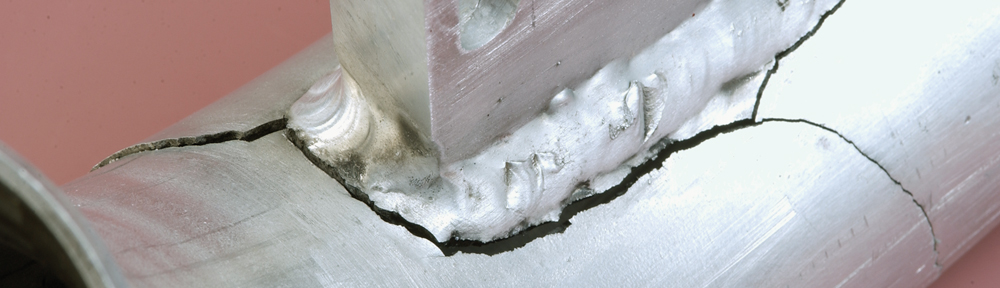
Abstract : Multi-wire submerged arc welding (SAW) process is conventionally used for long welds with large cross sections in tubular steel tower manufacturing. By applying non-vacuum electron beam welding (NVEBW), the number of passes and the heat input can be notably reduced. For plate thicknesses of 20 mm or more the continuous appearance of solidification cracks inside the weld cross section rouse a great challenge. The fatigue resistance is reduced significantly and the safety of the component cannot be ensured. In this paper analytical and experimental investigations are discussed for predicting fatigue life of defective welds.

telecharger le doc

Failure Analysis of Off-axis Crushing of Stitched Composite Absorbers

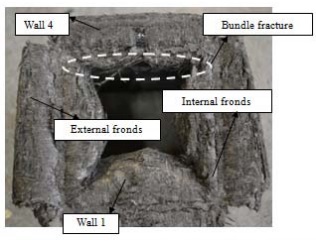
crush boxDespite extensive investigations on the energy absorbing capabilities of fibre reinforced polymer (FRP) composite absorbers under axial loading, the off-axis crashworthy behaviour of composite absorbers remains unknown. In the present paper, published by School Aerospace & Aircraft Engineering-Kingston University- London,   the effects of stitching on the crack growth resistance, energy absorption and also off-axis crashworthy behaviour of CFRP composite box sections will be studied. The analytical methods are implemented to investigate the effect of various failure modes such as bending, friction, bundle fracture, and interlaminar crack growth for the observed crushing modes.

Acceder article

CRANKSHAFT FAILURE DUE TO FATIGUE—A REVIEW

couvertureAn interresting paper published in « International Journal of Mechanical Engineeering and Robotics Research« . This paper focuses on the failure of crankshaft due to fatigue which are put into service in several aplications. Crankshaft is important part in al types of engines employed in aplications like aircraft, reciprocating compresor, marine engine, vehicle engine as wel as diesel generator. The failure of crankshaft is due to fatigue resulting into cracks on the surface of crankshaft and efect of residual streses due to filet roling proces. The motivation behind this paper is to study how fatigue phenomenon leads to the failure of the crankshaft.

telecharger le doc

A failure study of the railway rail serviced for heavy cargo trains

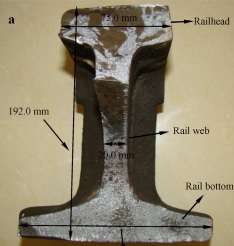
rail fractureA paper published in« Case study in Engineering Failure Analysis »In this case study, a failed railway rail which was used for heavy cargo trains was investigated in order to find out its root cause. The crack is supposed to be initiated from the weaker ferrite networks. Given all of that, the failed railway rail is considered to be caused by overload. It is of great importance to improve the welding technology, and control the load of train in order to prevent similar failure in future.

telecharger le doc