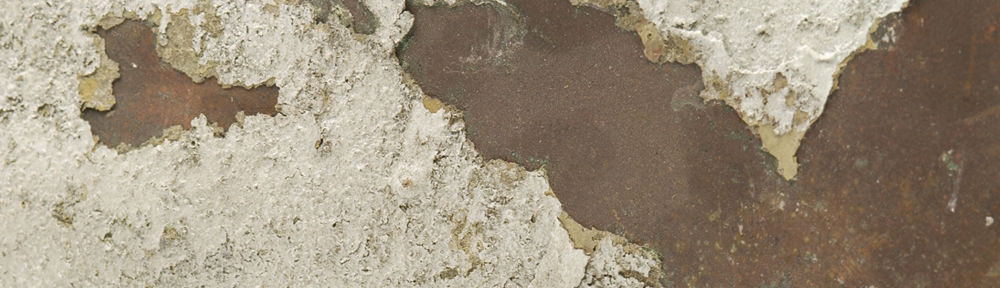
 Journal bearings as so sensitive parts of steam turbines are very susceptible to failure through different mechanisms of wear, fatigue and crush during service conditions. Failure occurring through these mechanisms lead to turbine completely shut down as a result of interfering in working conditions of bearing different parts. In this research, failed interfered part of a journal bearing related to a 320,000 kW steam turbine was examined.The studies were revealed that the bearing part loosing and inappropriate clearance can produce relative displacements under cyclic gradient loading. This condition was detrimental for the service life of turbine journal bearing via failure through fretting fatigue mechanism.

 A new topic on
 A new paper in
  A new article in « Engineering Failure Analysis » of septembre 2014. Pedicle screws are used for treating several types of spinal injuries. Although several commercial versions are presently available, they are mostly either fully cylindrical or fully conical. In this study, the bending strengths of seven types of commercial pedicle screws and a newly designed double dual core screw were evaluated by finite element analyses and biomechanical tests. The finite element analysis further revealed that the point of maximum tensile stress in the screw model was comparable to the point at which fracture occurred during the fatigue test.
 This article, published in » Engeeniring Failure Analysis » of september 2010, describes the root cause failure analysis of a mechanical vapor recompressor (MVR) impeller used in a dairy processing plant. A detailed investigation was commissioned to determine the source of the oscillatory stresses that must have been present to cause fatigue. A vibration analysis indicated large torsional oscillatory stresses, leading to fatigue, were induced by excitation of the 1st and 2nd torsional vibration modes of the MVR impeller and motor system. The excitation was induced by the control system for the motor variable speed drive (VSD).
 Cet ouvrage de la collection Performances du Cetim «Comportement en fatigue des matériaux métalliques – Fatigue des assemblages soudés – Soudage à l’arc» est le deuxième fascicule de la collection. Dédié spécifiquement à la fatigue des assemblages soudés, il traite notamment de la conception de ces assemblages, de leur optimisation et des moyens pour calculer leur résistance.Les bonnes pratiques de conception des assemblages soudés, le choix de l’acier et un classement de ces assemblages en fonction de leurs contraintes admissibles sont données en annexe.

 A new Case Study in « Case Studies in Engineering Failure Analysis »,