Analysis of plastic conveyor Slat belt

automotive failuresA interesting paper in « International Journal of Advance Engineering and Research Development » (IJAERD) published on ijaerd.co.in.

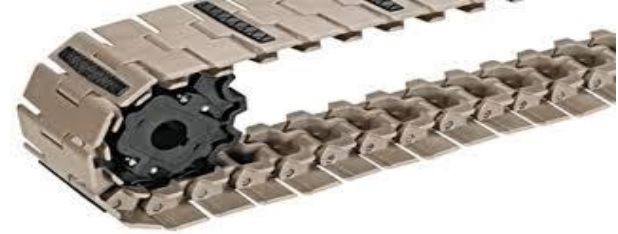
Abstract- McCain Foods, an MNC, manufacturer and supplier of FMCG products located in Gujarat, India was experiencing frequent breakdown in operations. During inspection, the plastic conveyor belt  and gear mechanism were suspected. Stress analysis of a standard plastic modular link of different  height is done using finite element methods. The mechanical behavior of a standard Slat chain which is loaded by the maximum allowed load are considered. The Finite Element analysis has been proved appropriate tool as compared to theoretical computations

telecharger le doc

Failure analysis of cracked Brass turrets

A interesting paper in « Case study in Engineering Failure Analysis » published on ScienceDirect.com. Copper alloys are widely used in electrical circuits mainly due to their electrical conductivity. This paper describes cracking of turret terminals made of free cutting brass during swaging operation.

Acceder article

Failure analysis of deaerator/sourgas stripper cylinder of ammonia

A new « Case Studies in Engineering Failure Analysis » online 17 June 2014, about the cracking leakage accident of deaerator/sourgas stripper cylinder in a chemical fertilizer plant. The analysis results indicated that improper welding was the main reason for the cylinder cracking failure. Chromic carbide (Cr23C6) was precipitated at partial grain boundaries of the transition region between base metal and weld seam and induced the depletion of Cr element at the grain boundary and in the vicinity of grain boundary. Cl in the media was enriched at the grain boundary of chromium depletion region and formed pitting corrosion, which could lead to stress-corrosion cracking of cylinder under tensile stress.

touche Read more

Analysis and Performance of Automobile Engine Components Considering Thermal and Structural Effects

automotive failuresAn article published in « International Journal of Innovative Research in Science, Engineering and Technology« , January 2014.

This paper presents an investigation report of effect of various parameters which affect the performance of an automobile engine. Almost all internal combustion engines have at least one connecting rod to transmit the thrust of the piston to the crankshaft, and as the result the reciprocating motion of the piston is translated into rotational motion of the crankshaft. From the viewpoint of functionality, connecting rods must have the highest possible rigidity at the lowest weight capable to withstand varying loads. It has been found that structural failure of various components results in engine missing and starts producing noise and vibration during racing, mileage gets affected and black or white smoke arise also pickup gets reduced. In automobile industry damaged or broken parts are generally too expensive to replace or repair especially in case of engine. In this concern they presented detailed analysis of causes along with preventive maintenance suggestion schedule for better engine life. 

telecharger le doc

Reduction in diversion due to coil break

A new case study, in « Case Studies, in Engeeniring Failure Analysis », Volume 2, Issue 2, October 2014, Pages 76–83.

Diversion due to coil break in cold rolled non oriented (CRNO) grades of coils showed an increasing trend during Jan–May’12 at Silicon Steel Mill (SSM), Rourkela Steel Plant (RSP). Coil break increased from a level of less than 1% during to a level of 30% in May’12. Further studies were carried out in the processing lines and material flow was tracked from steel making to final product. The probable reasons were identified and corrective measures were taken leading to reduction in diversion due to coil break less than 2%.

 Acceder article

Crack of a first stage blade in a steam turbine

A new Case Study in « Case Studies in Engineering Failure Analysis », Volume 2, Issue 2, October 2014, Pages 54–60

The failure of the first stage blade in a steam turbine of 55 MW was investigated. The blade was made of 17-4 PH stainless steel and has been used for 12 years before failure. The current work aims to find out the main cause of the first stage blade failure. The result showed that the crack at the blade root tang was due to corrosion fatigue and the crack occurred at the blade root fillet owing to stress corrosion cracking.

Acceder article


EXPLOSION OF IRON HYDROGEN STORAGE CONTAINERS 120 YEARS AGO – Investigations Revisited

An interesting  publication in “Engineering Failure Analysis” available online 24 April 2014.

A nearly authentic translation of Adolf Martenś investigation report on the failure of numerous hydrogen storage cylinders is provided.

  • Explosion of the iron containers caused immense destruction on the air field Berlin-Tempelhof in 1894.
  • The translation reveals very detailed experimental procedures and at that time quite modern materials testing technologies.
  • The importance of Adolf Martens as a pioneer in conducting failure investigations becomes obvious.

Acceder article

An investigation into failure analysis of interfering part of a steam turbine journal bearing

A new Case Studies in Engineering Failure Analysis. Journal bearings as so sensitive parts of steam turbines are very susceptible to failure through different mechanisms of wear, fatigue and crush during service conditions. Failure occurring through these mechanisms lead to turbine completely shut down as a result of interfering in working conditions of bearing different parts. In this research, failed interfered part of a journal bearing related to a 320,000 kW steam turbine was examined. The studies were revealed that the bearing part loosing and inappropriate clearance can produce relative displacements under cyclic gradient loading. This condition was detrimental for the service life of turbine journal bearing via failure through fretting fatigue mechanism.

touche Read more

FAILURE ANALYSIS OF RE-BARS DURING BENDING OPERATIONS

Thermo-mechanical treated(TMT) rebar is suitable material for reinforcing concrete structures on accounts of similarity in thermal expansion, ability to bond well with concrete and, above all the ability to shoulder most of the tensile stress acting on the structure and also steel manufacturing industry has successfully developed a corrosion-resistant variety of rebar for the construction industry. As the TMT is the finish product thus proper control of rolling parameters and water box is needed to achieve adequate property. Water box plays an important role for achieving the final structure and property of the rebars.Water box is responsible for outer rim formation and which helps to achieve the yield strength of the material. The present paper highlights failure investigation of a failed rebar during bending operations. From Fractography and microstructural analysis it is confirmed that the rebar sample failed in brittle manner due to through harden martensitic structure and which indicates that there is some anomaly in water box resulting in these premature failures.

Source : Case Studies in Engineering Failure Analysis