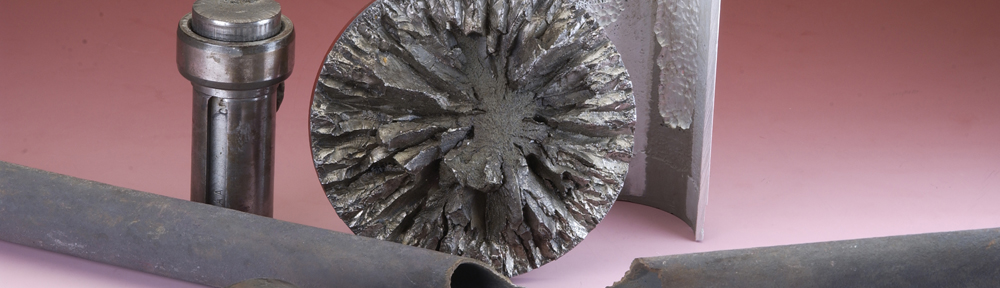
 Dès 1988, le CETIM s’est attaché à définir les limites de déformation pour lesquelles une pièce emboutie à froid ne présente aucun risque de fragilité et peut donc être exemptée de traitement thermique. L’article paru en avril 1989 dans le numéro 110 de la revue CETIM-Informations vient d’être mis en ligne dans la Mecatech.
Lire l’article : Vintage – Les emboutis profonds ne sont pas si fragiles
 Read on
 The Leak-Before-Break (LBB) concept has an effect on the safety design of Fast Breeder Reactors (FBRs), and thus its assessment has been one of the most significant issues. In the case of a commercial-scale FBR, since the main loads are the thermal expansion and thermal transient stresses, ferrite steel with a low thermal expansion rate has been a candidate material. A conventional LBB assessment method is insufficient to consider these characteristics, thus an advanced method is required.
 The control valve body failed due to combination of SSC and HIC cracking in wet H2S environment. According to HIC and SSC laboratory tests the best alternative for the valve body alloy is
  The main aim of this study was to analyze the pitting corrosion and stress corrosion cracking which is initiated on prototype cold-formed outer exhaust sleeves during the testing of different cleaning procedures before chromium plating. Various microscopic methods were used to identify the initiation of corrosion and its propagation.
 The erosion rate of convection surfaces is crucial for boiler reliability.
  Valve had failed as a result of particles of material becoming trapped between the valve seat recess and the valve seat ball, leading to erosion of the valve seat recess, valve seat ball and the valve operating pin; this allowed hydraulic fluid to flow when the valve was nominally in the de-energised position.The material of construction of the valve seats was not compliant with engineering drawings.The investigation demonstrated the importance of maintaining the cleanliness of hydraulic systems and of the need to control the materials of manufacture in safety critical applications.