 La fiabilité des équipements mécaniques est donc un sujet primordial dans l’industrie. Cet ouvrage, édité pour les mécaniciens par le Cetim, rappelle finalement ces évidences. Car son apport est indiscutable. Encore faut-il l’intégrer, la construire et faire en sorte qu’il y ait un maintien.
Accessible et pragmatique, ce recueil s’adresse aux non initiés et donne au lecteur les principaux éléments de compréhension des concepts de la fiabilité. En 160 pages, il décrit les clés pour la maîtrise des risques de défaillance des équipements, les conseils pour la mise en œuvre efficace des techniques et des méthodes relatives à la fiabilité, les informations essentielles sur les aspects complémentaires tels que la sûreté de fonctionnement des équipements, les coûts associés.
Plus d’information : Clés pour la fiabilité des équipements mécaniques – Cetim – Centre technique des industries mécaniques.
 A commercial gas velocity sensor used for flue gases monitoring was subject to severe corrosion failure. A combination of mechanisms was proposed including a dominating 5 severe dew point corrosion for both transducer and its covering, galvanic attack and an eventual hydrogen attack for the transducer side part. Recommendations were proposed to avoid a future severe damage to such type of sensor including an insulation between transducer and covering metals and an up-grade of the titanium alloy used.
 Highlights

 Case study of stainless steel components of a geothermal heating system failed prematurely. The crack surfaces were brittle in appearance and were predominately transgranular. The failure was determined to be caused by chloride induced stress corrosion cracking. Subsequent failures may be avoided by informed alloy selection.
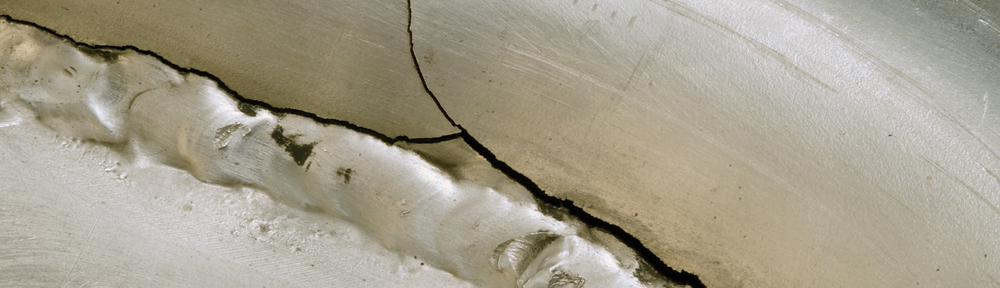
 High pressure pipe failed by fatigue in the fusion line of longitudinal weld.
 In this study, failure analysis of rocker liners used for charging system of Blast Furnace was carried out. The failed rocker liner samples shows non-uniform distribution of carbides, resulted in variation of hardness as well as wear properties. After proper heat-treatment and chemistry modification, the Rocker Liner obtained high hardness (with uniformity) due to proper distribution of carbide phases in the tempered martensitic matrix. Thus proper heat treatment is needed to achieve optimum property with changing the material composition to deal with this stringent working condition. Rocker liner with modified microstructure was trailed in the Blast Furnace and it has given a life of around 20-22 months life.
 The damage of the inelastic coating was more serious than the elastic coating. The failure causes of the antistatic coating on the radome were analyzed. The results show that the failure of inelastic and elastic antistatic coatings was caused by particles erosion, and the aging of the coatings accelerated the failure of coatings. The elastic coating had better anti-erosion ability than the inelastic coating because of its high fracture elongation and good elastic deformation, so its damage was lighter than the inelastic coating.
 Highlights :