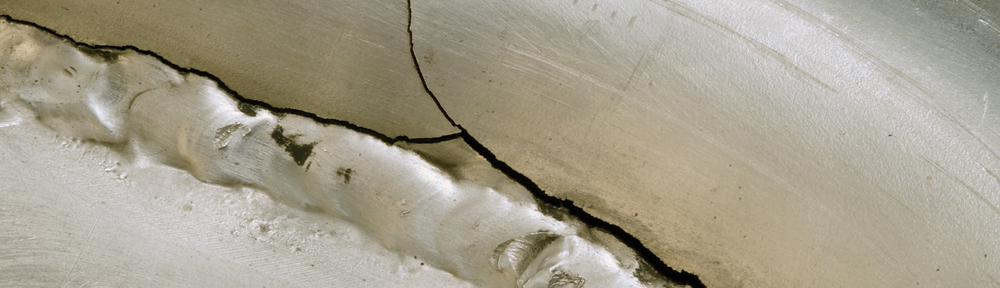
 Control valve (actuator) is the frequently moving terminal Instrument of the control system. To avoid the leaking of the actuator, there is packing at the moving parts. However, the friction caused by the packing can do harm to the control of the system. The washing effect of the media, high temperature, high pressure, frequent movement and other effects can result in the leaking of the packing and the deformation of the valve stem, which causes the change of the friction. In this paper, published in Sensors & Transducers, Vol. 177, Issue 8, August 2014, it’s theoretically analyzed the relationship of the friction of the packing and the static performance of the control valve, and offered a method to check the quality of the moving parts by attaching a strain gage (strain rosette) to the empty part of the valve stem. This method has been demonstrated via experiment and a method to do error detection is provided at last. Paper published by http://www.sensorsportal.com/.

 A new paper in
 A new article in « Engineering Failure Analysis » of septembre 2014. Pedicle screws are used for treating several types of spinal injuries. Although several commercial versions are presently available, they are mostly either fully cylindrical or fully conical. In this study, the bending strengths of seven types of commercial pedicle screws and a newly designed double dual core screw were evaluated by finite element analyses and biomechanical tests. The finite element analysis further revealed that the point of maximum tensile stress in the screw model was comparable to the point at which fracture occurred during the fatigue test.
 This article, published in » Engeeniring Failure Analysis » of september 2010, describes the root cause failure analysis of a mechanical vapor recompressor (MVR) impeller used in a dairy processing plant. A detailed investigation was commissioned to determine the source of the oscillatory stresses that must have been present to cause fatigue. A vibration analysis indicated large torsional oscillatory stresses, leading to fatigue, were induced by excitation of the 1st and 2nd torsional vibration modes of the MVR impeller and motor system. The excitation was induced by the control system for the motor variable speed drive (VSD).
 In this review paper, a methodology for measuring the interface fracture toughness of a crack between two isotropic, homogeneous materials and a delamination between two laminae of unidirectional composite materials of differing directions is presented. Four cases are considered. For the laminates described here, they were determined by the Stroh and Lekhnittski formalisms. A failure criterion determined from first principles is presented.
 This article documents the metallurgical evaluation of a rolling element bearing that failed due to electrical discharge damage. This rolling element bearing was used in a helicopter turbine engine that failed in-flight, resulting in a hard landing of the helicopter. Optical and electron microscopy as well as energy dispersive spectroscopy were used to evaluate the bearing. Pitting and material transfer on the external bearing races bearing and mating surfaces revealed that the electrical discharge damage occurred while the engine’s components were not rotating.
 Cet ouvrage de la collection Performances du Cetim «Comportement en fatigue des matériaux métalliques – Fatigue des assemblages soudés – Soudage à l’arc» est le deuxième fascicule de la collection. Dédié spécifiquement à la fatigue des assemblages soudés, il traite notamment de la conception de ces assemblages, de leur optimisation et des moyens pour calculer leur résistance.Les bonnes pratiques de conception des assemblages soudés, le choix de l’acier et un classement de ces assemblages en fonction de leurs contraintes admissibles sont données en annexe.
 A new paper about