Reduction in diversion due to coil break in CRNO grades of coils

A new « Case study in Engineering Failure Analysis » published on ScienceDirect.com.

This paper reports investigations after diversion due to coil break in cold rolled non oriented (CRNO) grades of coils showed an increasing trend during Jan–May’12 at Silicon Steel Mill (SSM), Rourkela Steel Plant (RSP). Coil break increased from a level of less than 1% during to a level of 30% in May’12. Samples from hot rolled coils and finished coils were taken and detailed metallurgical investigation was carried out to ascertain the genesis of such defects. Further studies were carried out in the processing lines and material flow was tracked from steel making to final product. The probable reasons were identified and corrective measures were taken leading to reduction in diversion due to coil break less than 2%.

Acceder article

Failure analysis of a vibration isolator used in launch vehicle applications

A new paper published in « Case study in Engineering Failure Analysis »  on ScienceDirect.com.

Vibration isolators are used in launch vehicles to protect sensitive electronic equipments from the rigors of flight structural vibrations during the lift-off and ascent phase. Failure of one such vibration isolator made of AISI 304 is reported in the present study after ground level testing has been completed.  Finally, it was concluded that micro cracks formed during the deep drawing operation due to large strains at the fore end corner propagated during vibration testing resulting in the failure of the body of the vibration isolator.

Acceder article


Analysis and Performance of Automobile Engine Components

couvertureThis paper was published in « International Journal of Innovative Research in Science, Engineering and Technology ». This paper presents an investigation report of effect of various parameters which affect the performance of an automobile engine. Almost all internal combustion engines have at least one connecting rod to transmit the thrust of the piston to the crankshaft, and as the result the reciprocating motion of the piston is translated into rotational motion of the crankshaft. From the viewpoint of functionality, connecting rods must have the highest possible rigidity at the lowest weight capable to withstand varying loads. It has been found that structural failure of various components results in engine missing and starts producing noise and vibration during racing, mileage gets affected and black or white smoke arise also pickup gets reduced. In automobile industry damaged or broken parts are generally too expensive to replace or repair especially in case of engine. In this concern we presented detailed analysis of causes along with preventive maintenance suggestion schedule for better engine life.

telecharger le doc

CRANKSHAFT FAILURE DUE TO FATIGUE—A REVIEW

couvertureAn interresting paper published in « International Journal of Mechanical Engineeering and Robotics Research« . This paper focuses on the failure of crankshaft due to fatigue which are put into service in several aplications. Crankshaft is important part in al types of engines employed in aplications like aircraft, reciprocating compresor, marine engine, vehicle engine as wel as diesel generator. The failure of crankshaft is due to fatigue resulting into cracks on the surface of crankshaft and efect of residual streses due to filet roling proces. The motivation behind this paper is to study how fatigue phenomenon leads to the failure of the crankshaft.

telecharger le doc

Fracture mechanisms of failed IN-738LC gas turbine blades

An interesting  paper in « Case study in Engineering Failure Analysis » published on ScienceDirect.com. This paper outlines the problem of blades failure occurred because of excessive temperature exposure. Nickel based superalloys are widely used as gas turbine blade material. They suffer from microstructural instabilities and environmental damages. Creep properties of alloy was deteriorated by γ‘ particles dissolution.

Acceder article


A failure study of the railway rail serviced for heavy cargo trains

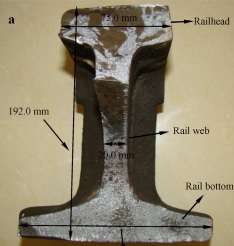
rail fractureA paper published in« Case study in Engineering Failure Analysis »In this case study, a failed railway rail which was used for heavy cargo trains was investigated in order to find out its root cause. The crack is supposed to be initiated from the weaker ferrite networks. Given all of that, the failed railway rail is considered to be caused by overload. It is of great importance to improve the welding technology, and control the load of train in order to prevent similar failure in future.

telecharger le doc


Interfering part of a steam turbine journal bearing

bearing part frettingJournal bearings as so sensitive parts of steam turbines are very susceptible to failure through different mechanisms of wear, fatigue and crush during service conditions. Failure occurring through these mechanisms lead to turbine completely shut down as a result of interfering in working conditions of bearing different parts. In this research, failed interfered part of a journal bearing related to a 320,000 kW steam turbine was examined.The studies were revealed that the bearing part loosing and inappropriate clearance can produce relative displacements under cyclic gradient loading. This condition was detrimental for the service life of turbine journal bearing via failure through fretting fatigue mechanism.

Acceder article

Case Studies in Marine Concentrated Corrosion

A new paper in « Case study in Engineering Failure Analysis » published on ScienceDirect.com. This paper outlines the problem and analysis techniques in three exemplar case studies of marine concentrated corrosion. The paper includes an outline of some of the relevant literature relating to the use of these modern techniques in identifying marine corrosion products.

Acceder article

Corrosion in Fire Protection Systems

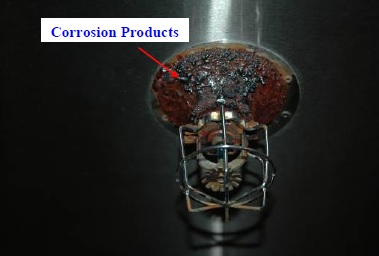
Sprinkler corrosionA paper published on  the site of FM Global. The purpose of this technical report is to  explain corrosion in fire protection systems (FPS). Factors such as pipe weld corrosion, residual water in dry pipe systems, trapped air in wet pipe systems, microbiologically influenced corrosion, and corrosive water chemistry are discussed. A corrosion resistant sprinkler system for highly corrosive exhaust  duct is also addressed. This report provides the basis for development of corrosion mitigation strategies of existing FPS and lays out directions for further study on corrosion mitigation and management of FPS.

telecharger le doc

Hydrogen embrittlement in steel fasteners

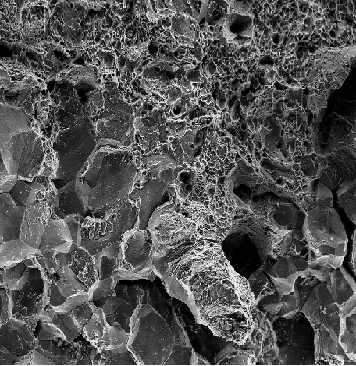
hydrogen embrittlementThis paper is published on http://www.boltcouncil.org by Salim Brahimi, President at IBECA Technologies Corp, Chairman, Committee F16 (Fasteners) at ASTM International, The objective of this paper is to distil the latest knowledge related to hydrogen embrittlement into know-how in a manner that is complete yet simple, and directly applicable to fasteners. The topic is divided into basic components. First is a description of the theory and mechanism of hydrogen damage, followed by a discussion of conditions that are necessary for hydrogen embrittlement failure to occur. The fundamentals are followed by a description of HE test methods, guidelines for processing, surface cleaning, coating (particularly electroplating), and baking.

telecharger le doc