MIC failure of 304L stainless steel piping left stagnant after hydrotesting

MIC failure of 304L stainless steel piping left stagnant after hydrotesting


Auteur(s) / Author(s)

BORENSTEIN Susan W. (1) ; LINDSAY Philip B. (1) ;

Affiliation(s) du ou des auteurs / Author(s) Affiliation(s)

(1) Aptech Engineering Services, Inc., ETATS-UNIS

Résumé / Abstract

This case history describes how microbiologycally influenced curresion (MIC) occurred on AISI type 304L stainless steel (UNS S30403) piping after being in contact with untreated, stagnant, low-chloride potable water for 9 months. MIC is caused by the presence and activities of microorganisms within biofilms. It is often misdiagnosed as attack caused by conventional chloride crevice/pitting corrosion. Specialized microbiological analysis techniques, including surface analysis by environmental scanning electron microscopy and in situ bacterial and optical microscopy, were used in the failure analysis.

Revue / Journal Title

Materials performance ISSN 0094-1492

Source / Source

2002, vol. 41, no6, pp. 70-73 (6 ref.)

Langue / Language

Anglais

Editeur / Publisher

National Association of Corrosion Engineers, Houston, TX, ETATS-UNIS (1974) (Revue)

Mots-clés anglais / English Keywords

Austenitic stainless steel

;

Stainless steel-304L

;

Experimental study

;

Corrosion mechanism

;

Bacterial corrosion

;

Corrosion

;

Piping

;

Steel

;

Mots-clés français / French Keywords

Acier Cr19Ni10-L

;

Acier inoxydable austénitique

;

Acier inoxydable 304L

;

Etude expérimentale

;

Mécanisme corrosion

;

Corrosion biochimique

;

Corrosion

;

Tuyauterie

;

Acier

;

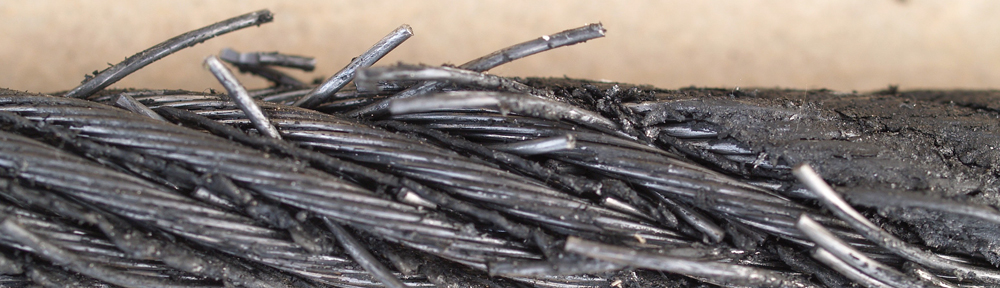
Failure analysis of aluminum cable steel reinforced (ACSR) conductor of the transmission line crossing the Paraná River

Failure analysis of aluminum cable steel reinforced (ACSR) conductor of the transmission line crossing the Paraná River

Laboratory for Failure Analysis, Instituto de Pesquisas Tecnológicas do Estado de São Paulo, PO Box 0141, São Paulo ZIP 01064-970, Brazil

Received 2 May 2002; Accepted 12 May 2002. Available online 19 October 2002.

Abstract

The failure of the conductor of the 460 kV overhead transmission line located along the crossing of the Paraná River was investigated. As a result of this failure, a blackout took place in the southern states of Brazil in January of 2002, reaching approximately 67 million inhabitants. Investigation of the external aluminium layer of the ACSR conductor near the fracture showed typical static deformation marks and dynamic fretting wear tangential marks, both associated with the presence of Al2O3 debris. Additionally, encrusted silicon particles were observed on the external surface of the strands. The internal Al layer showed elliptical deformation marks also associated with Al2O3 debris. Both Al2O3 and Si particles are efficient abrasive material, which associated with slight relative motion of metallic surfaces (clamp/strand and strand/strand) can promote fretting wear. Two types of fracture surface of the Al strands were identified: 45° and quasi-normal surfaces, the former being the predominant type. Delamination and particle detachment were the mechanisms of superficial degradation observed on the Al strands, indicating that the rupture of the strands occurred under a gross slip fretting regime induced by sub-conductor oscillation. Inspection of the internal surface of as-cast Al–10%Si spacer clamps revealed different stages of intense circumferential wear caused by the preferential cracking and particle detachment of the eutectic constituent of the as-cast microstructure. This intense wear reduces the clamping contact pressure, which allows higher displacement amplitude and leads to the critical fretting regime. Finally, a few suggestions are discussed to minimise the occurrence of future failures.

Keywords: Failure analysis; Power lines; Fretting; Wear; Rupture

Stress and failure analysis of mechanically fastened joints in composite laminates

Marie-Laure Dano, Guy Gendron, André Picard, 
Stress and failure analysis of mechanically fastened joints in composite laminates, Composite Structures, Volume 50, Issue 3, November 2000, Pages 287-296, ISSN 0263-8223, 10.1016/S0263-8223(00)00119-7. 
http://www.sciencedirect.com/science/article/pii/S0263822300001197
Abstract : The literature published on single mechanically fastened joints in fiber-reinforced plastics is reviewed. A finite-element model is developed to predict the response of pin-loaded composite plates. The model takes into account contact at the pin–hole interface, progressive damage, large deformation theory, and a non-linear shear stress–strain relationship. To predict the progressive ply failure, the analysis combines Hashin and the maximum stress failure criteria. The objectives of the study are to determine the influence of the failure criteria, the inclusion of a non-linear shear behavior on the strength prediction and the load–pin displacement curve. The proposed model is used to predict the bearing response of composite plates with different stacking sequences. Good agreement between experimental results and numerical predictions is observed. 
Keywords: Pin-joints; Composite laminates; Finite-element analysis; Non-linear modelling; Failure criteria; Bearing strength